Why Assassin’s Creed Shadows Isn’t Just Another Ghost of Tsushima
I still remember the heated discussions in my gaming circle back in 2024 when Assassin’s Creed Shadows was first revealed. Every other comment on forums and social media screamed, “It’s just a Ghost of Tsushima clone!” Fast-forward to 2026, and after sinking hundreds of hours into both titles, I can confidently say that while the surface-level comparisons are understandable, the deeper you dig, the more you realize how dramatically these two feudal Japan epics diverge. Let me walk you through what I’ve discovered.
The Century Gap That Changes Everything ⏳
Clock this: Ghost of Tsushima drops you into the late 13th century during the Mongol invasion of Tsushima Island. Meanwhile, Assassin’s Creed Shadows unfolds in the late 16th century Azuchi-Momoyama period. That’s over 300 years of history, warfare, and cultural shifts separating them. Think about what our own world looked like three centuries ago – it’s a completely different beast. This timeline alone plants the seed for fundamentally distinct gameplay experiences, and honestly, once I realized this, the clone accusations started to feel lazy.
Architectural Storytelling: From Quiet Hamlets to Bustling Urban Jungles 🏯
Let me paint a picture for you. In Ghost of Tsushima, the architecture feels meditative. Wooden farmhouses with thatched roofs dot the landscape, Shinto shrines peek out from misty forests, and interiors are minimalist to the point of being almost empty. It’s beautiful, but intentionally sparse – a design choice that mirrors the rustic, survivalist tone of the Kamakura period. I loved ambling through those serene villages, yet I always wished they felt a bit more alive.
Then I booted up Assassin’s Creed Shadows. Whoa. The contrast punched me in the face.
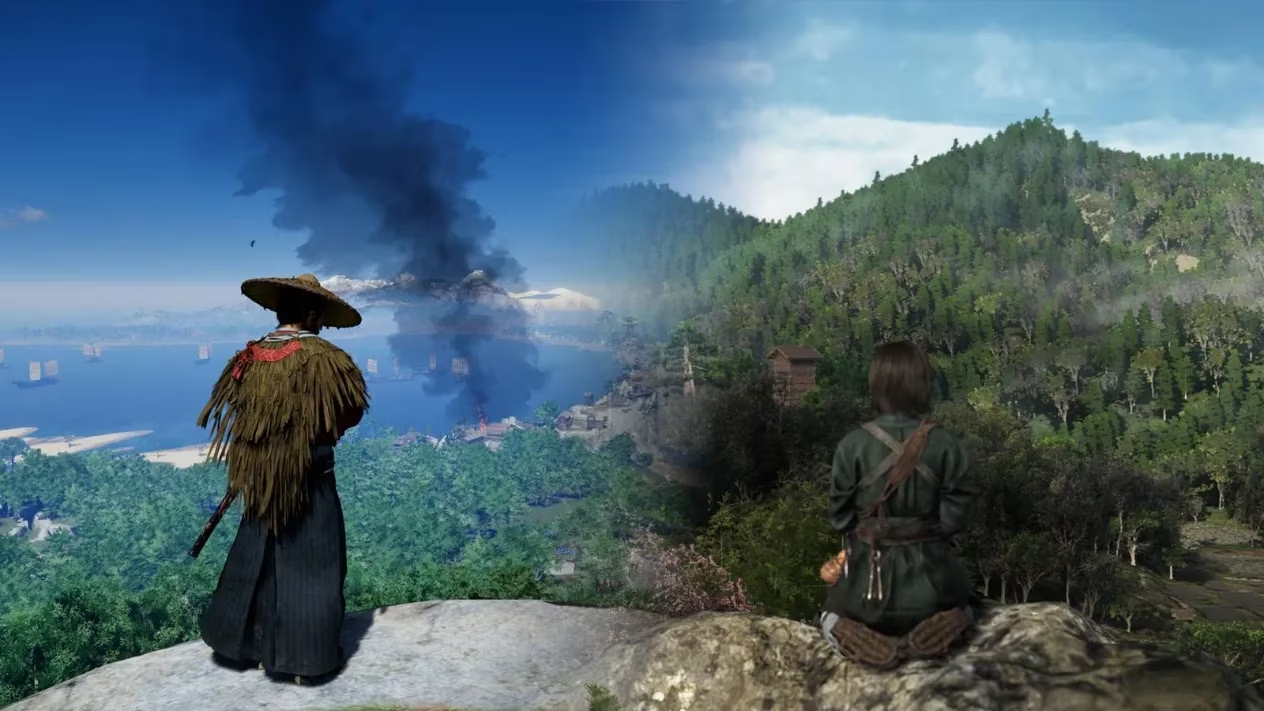
Here’s what jumped out at me right away:
-
Urban density: Azuchi-Momoyama Japan was a period of rapid urbanization, and AC Shadows captures this brilliantly. You’ll sprint through crowded market streets where merchants hawk their wares, past samurai districts bristling with imposing castles, and into ports teeming with Portuguese and Jesuit influences. The buildings themselves are showier – gilded screens, ornate roof tiles, and multi-story structures that beg to be scaled.
-
Lived-in spaces: Unlike Tsushima’s relatively static (if picturesque) settlements, the towns in AC Shadows buzz with NPCs who have daily routines. I once followed a tea merchant from dawn till dusk just to see where he’d go – turns out he had a whole back-alley negotiation subplot I wasn’t expecting.
-
Foreign fingerprints: The 16th century saw intense contact with European traders and missionaries. This shows up in the architecture through Christian motifs, cannons, and hybrid construction styles that you simply won’t find in the 1274 setting of Ghost of Tsushima.
So yes, both games feature pagodas and torii gates, but the architectural philosophy is worlds apart. One whispers tradition; the other shouts transformation.
Nature’s Shifting Face: Static Beauty vs. A Living World 🌸❄️
Both games nail the jaw-dropping natural beauty of Japan. Ghost of Tsushima’s guiding wind, golden forests, and vibrant flowers are etched into my memory forever. Sucker Punch used color as an emotional compass, and it works masterfully. But the environment itself, beyond scripted weather changes, remains essentially the same backdrop throughout your journey – a painted scroll that rarely rewrites itself.
Assassin’s Creed Shadows takes a radically different approach that I’ve grown obsessed with over the last two years. It implements a real-time seasonal cycle that doesn’t just reskin the world; it alters traversal, stealth, and combat:
| Season | Visual Impact | Gameplay Effect |
|---|---|---|
| Spring | Cherry blossoms, rain showers | Slick rooftops make parkour riskier; blooming bushes create new hiding spots |
| Summer | Dense foliage, cicadas buzzing | Tall grass and crops provide mobile cover for ambushes |
| Autumn | Fiery maple leaves, crisp air | Falling leaves can reveal enemy positions; windy conditions muffle footsteps |
| Winter | Thick snow, frozen waterways | Deep snow slows movement but lets you slide down slopes; frozen ponds become new traversal routes |
This system keeps exploration fresh even in 2026, long after I’ve memorized every district. I can sneak through the same castle in spring and winter and face entirely different infiltration puzzles. Ghost of Tsushima’s world is a masterpiece, but it doesn’t evolve with you. AC Shadows’ landscape is a character that grows, decays, and regenerates.
Why the Comparisons Made Sense (and Why They Eventually Fall Apart) 🤔
I get it. Before launch, we had two AAA open-world samurai-adjacent games set in Japan. The kneejerk reaction was inevitable – especially since Ghost of Tsushima set such a high bar. But now, after two years of community dissections and post-launch content, the conversation has shifted. Players who’ve invested time in both realize they scratch completely different itches.
For me, Ghost of Tsushima is a meditative samurai cinema simulator. It’s about mastering the blades, soaking in the atmosphere, and living out that lone-warrior fantasy. Assassin’s Creed Shadows, however, is a chaotic, sprawling historical sandbox. It wants me to get lost in political intrigue, parkour across flaming pagodas, and watch my decisions ripple through a season-changing world.
Ubisoft’s latest entry didn’t just copy a formula; it built a denser, busier, and mechanically layered vision of feudal Japan that stands on its own. And honestly, with the 2025 Legacy of the Hidden Blade expansion adding full co-op and a map editor, the gap has widened even further.
So next time someone rolls their eyes and calls AC Shadows a clone, I’ll smile and ask: “Have you tried scaling the Portuguese trading post in the middle of a winter storm? It kind of changes your perspective.” 🌊
As we continue to explore and immerse ourselves in these richly detailed worlds, it's always exciting to anticipate what new adventures await in the gaming universe. Whether you're revisiting the timeless landscapes of Ghost of Tsushima or diving into the dynamic seasons of Assassin’s Creed Shadows, each game offers a unique experience that can be both thrilling and transformative.
For gamers looking to expand their library or catch up on these captivating titles, keeping an eye on current deals is a smart move. If you're planning to add these epic journeys to your collection, you might want to check game prices on DealNest. This website is a valuable resource for finding the best deals and ensuring that your next adventure starts at just the right price.