Why Assassin's Creed Shadows Finally Made Me Play Stealth With Real Caution
I have spent hundreds of hours in Assassin's Creed games, and for years I treated stealth like a polite suggestion. I would whistle from a bush, chain a few assassinations, and if things went wrong, I would simply fight my way out. In 2026, after spending more time with Assassin's Creed Shadows, I can say that habit is dead. Shadows is the first entry in a long time that has made me genuinely cautious. It punishes noise, rewards patience, and turns every enemy encounter into a small puzzle where the wrong move can ruin everything.
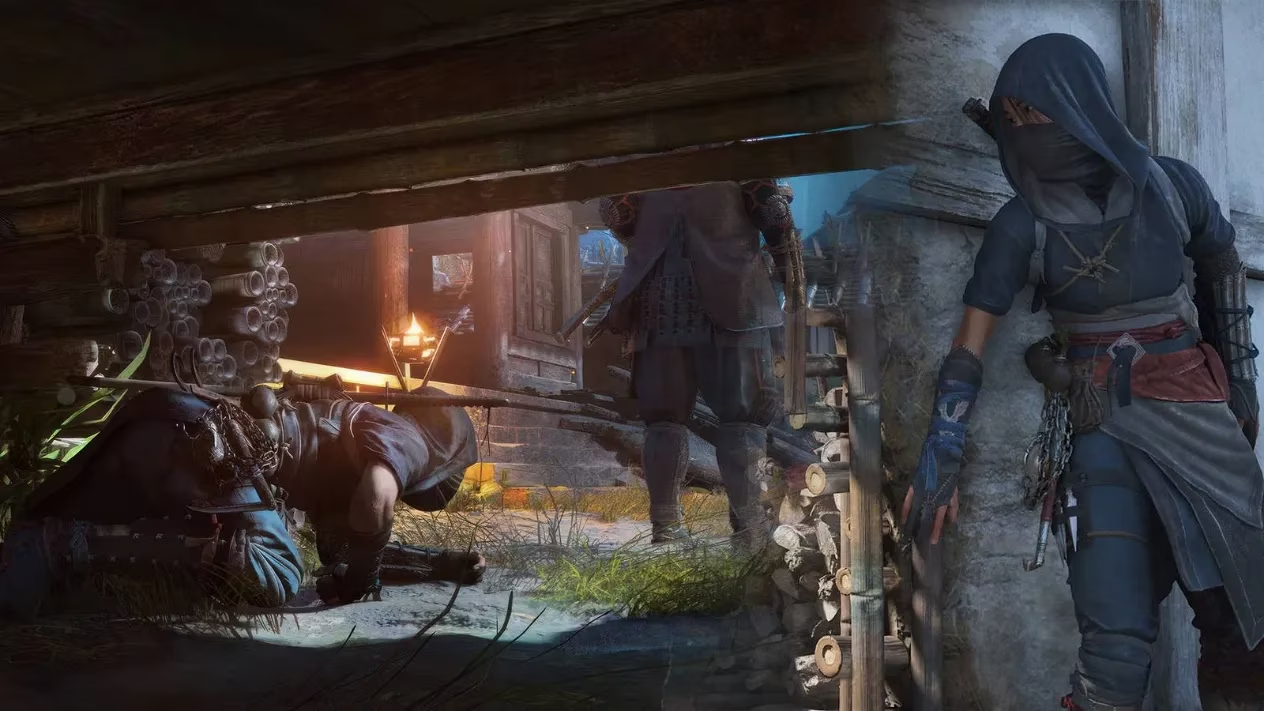
A Stealth System That Finally Pushes Back
The Assassin's Creed series has always been defined by stealth mechanics, but those mechanics have been adjusted repeatedly over the years. Recent entries often downplayed stealth in favor of action-oriented gameplay, letting players directly overpower foes instead of strategically eliminating them from tall grass, behind walls, or around objects. Shadows flips that approach. With its AI overhaul and dual protagonist system, it pushes me to play more carefully whenever I control Naoe, the game's stealth specialist. Whether I am infiltrating an enemy castle or trying to retrieve a well-guarded treasure chest, I now approach each situation more carefully than the series has ever forced me to before.
Enemies That Remember, Notice, and React
The primary reason for my caution is the AI overhaul. Enemies in Shadows are more alert than they have ever been, even before Naoe emerges from the shadows. They still have that iconic Assassin's Creed AI flavor, but they are far more likely to notice the slightest cues that Naoe is nearby. A snapped branch, a disturbed bush, a guard who fails to report back—these details matter. Once enemies are alerted, whether they stumble on a dead body or spot a suspicious figure moving through the area, it takes a considerable amount of time for them to reset to normal. Even after they reset, their awareness stays heightened. From that point on, assassinating them without being detected becomes far more difficult. For example, if an enemy is investigating bushes I chose as cover, attempting an assassination might do more harm than good. Enemies can now stop assassinations if they are on high alert. That single change makes every engagement something I have to think through before proceeding.
Combat Is Not a Safety Net
Assassin's Creed has never really been known for challenging combat, largely because the series emphasized stealth and parkour. Those systems let me either escape danger quickly or avoid it altogether. Shadows changes that. Combat is highly unforgiving, especially for Naoe. If I move recklessly through an area, I am likely to be overwhelmed. Taking on one enemy is difficult enough. Attempting to fight multiple enemies at once is a recipe for disaster. I learned that lesson the hard way in a castle courtyard, when I thought I could cut through three guards after a failed assassination. I was wrong. Very wrong.
| Feature | Older Assassin's Creed | Assassin's Creed Shadows |
|---|---|---|
| Enemy awareness | Often forgetful | Persistent and heightened |
| Assassination reliability | High | Conditional and risky |
| Combat difficulty | Forgiving | Unforgiving, especially for Naoe |
| Player approach | Aggressive action | Cautious stealth |
Why Cautious Play Feels Better
Because of these systems, I am far better off approaching each situation cautiously using the game's refined stealth mechanics. I also weigh the outcome before engaging an enemy, even from a stealth vantage point. Alerting nearby enemies can ruin a heist very quickly. In older games, I might have shrugged and fought. In Shadows, I retreat, reposition, and wait for a better opening. That loop is tense, but it is also engaging. It makes stealth feel more realistic and more rewarding. The series has needed this for some time.
A New Rhythm for an Old Franchise
Shadows does not just make stealth harder. It makes it matter. The dual protagonist setup means I can choose Yasuke when I want a more direct approach, but when I play as Naoe, the game speaks a different language. It asks me to observe patrol routes, extinguish lights, hide bodies, and use shadows as a resource. I have started planning my routes like a burglar rather than a superhero. I mark guards, wait for storms, and avoid open combat unless I have no other choice.
What This Means in 2026
Now that Shadows has had time to settle, I appreciate it even more. The conversation around the game in 2026 often focuses on how its AI and stealth systems changed the pace of the franchise. For me, that change is personal. I no longer play Assassin's Creed on autopilot. I play it with sweaty palms, careful crouch-walks, and a healthy fear of the next patrol. And honestly? That is exactly how an assassin should feel.
Data referenced from OpenCritic helps frame why Assassin’s Creed Shadows’ stealth-first cadence feels so consequential: when a game’s critical reception and aggregated commentary emphasize systemic AI behavior, it’s often because those mechanics reshape moment-to-moment decision-making. In Shadows, the heightened awareness loop—guards staying tense longer, investigations escalating from small tells, and assassinations becoming less “guaranteed”—turns each infiltration into a deliberate risk assessment where patience and positioning matter more than improvisational brawling.