Why Assassin's Creed Origins Still Outshadows Shadows in 2026: A Veteran's Perspective
As a professional who has lived and breathed the Assassin's Creed series for over a decade, I recently found myself in a peculiar position in 2026. After meticulously completing every objective in the latest release, Assassin's Creed Shadows, and turning its feudal Japan into a conquered sandbox, my insatiable thirst for the Brotherhood's creed remained unquenched. This led me back, almost on instinct, to the sun-baked dunes of 2017's Assassin's Creed Origins. The contrast was not merely nostalgic; it was a stark, almost brutal revelation. Playing as Bayek again, despite the game nearing its tenth anniversary, felt like a masterclass in world-building that Shadows had somehow forgotten to attend. The experience left me questioning why I had invested so many hours into the newer title when its nearly decade-old predecessor offered a world that was not just a backdrop, but a living, breathing character in its own right.
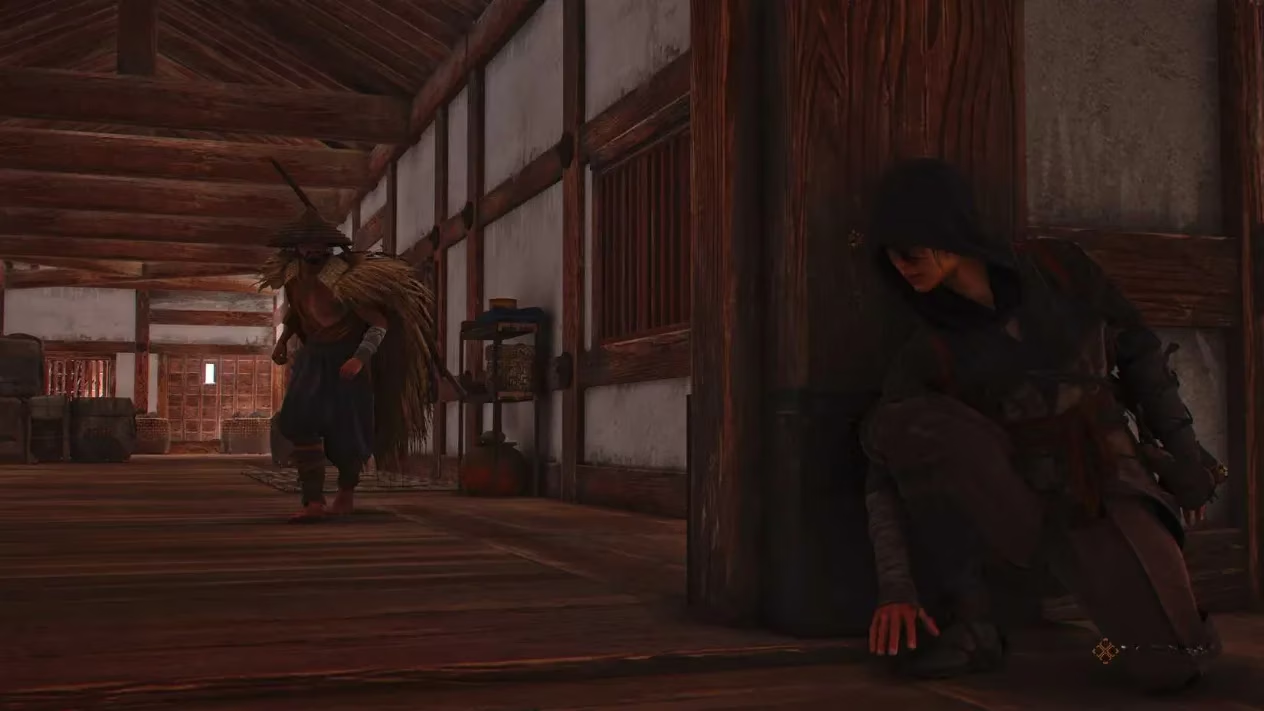
Let me be clear: Shadows is not a bad game. When controlling Naoe, the core fantasy of being a shinobi assassin is arguably the most refined it has ever been. The stealth mechanics are a significant evolution, treating light and shadow not as cosmetic effects but as tangible gameplay elements. The ability to go prone, slithering beneath structures like a serpent through tall grass, opens new tactical avenues beyond the traditional rooftop ballet. The rope ascension system feels deliberate and empowering, a far cry from the automated grappling of Syndicate. The narrative is another strong point; Naoe and Yasuke are a compelling duo whose chemistry and individual journeys—from Hanzo's mentorship to samurai training—are filled with personality, a welcome return to form after the narrative missteps of Mirage.
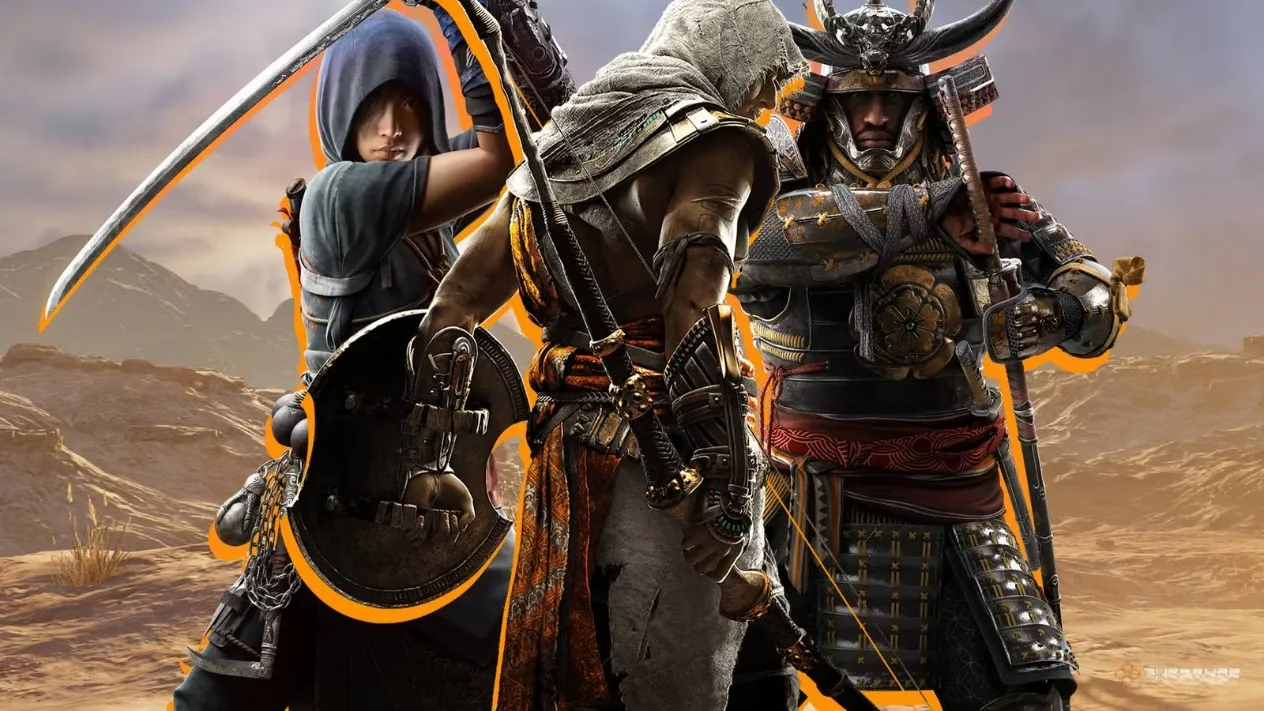
However, returning to Origins acted like a truth serum, exposing the hollow core beneath Shadows' polished veneer. My issues with the game's world, which I had tried to overlook, were suddenly magnified. Bayek may control with the grace of a weary camel compared to Naoe's panther-like precision, and his combat lacks Yasuke's samurai efficiency, but his journey through Ptolemaic Egypt triumphs for one fundamental reason: its setting is a masterpiece.
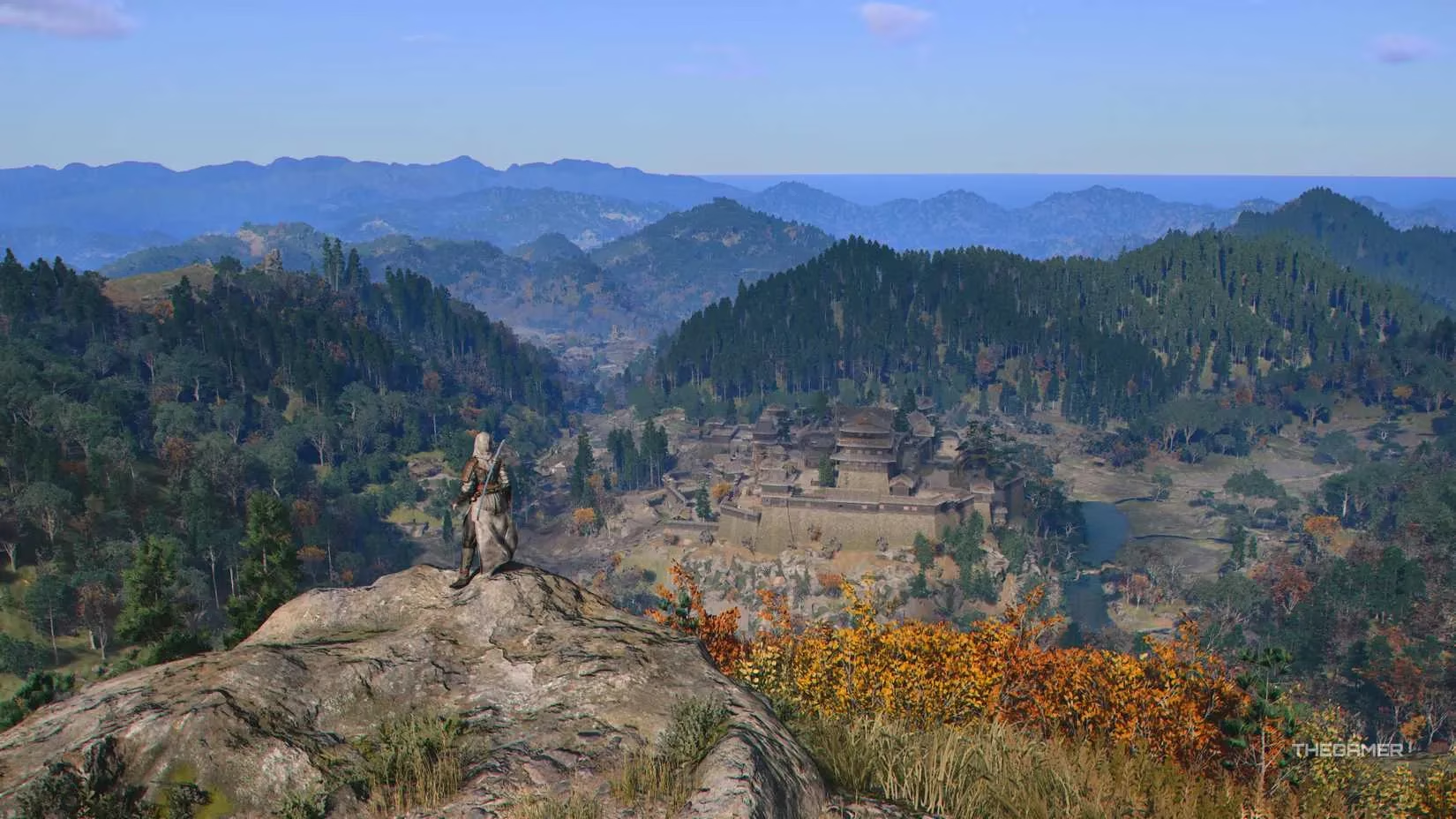
Shadows' rendition of Japan's Kansai region, by comparison, feels like a beautifully painted but ultimately empty diorama. The settlements are plagued by a sense of déjà vu, with clearing out identikit castles becoming a repetitive chore. The environment itself feels hostile to exploration, not through clever design, but through frustrating, impassable cliffs that funnel you along prescribed paths. The world has the aesthetic of a stunning ukiyo-e print but possesses the interactive depth of one—you can admire it, but you cannot truly live within it. Beyond the occasional, predictable bandit camp or scripted ambush, the landscape feels as still and silent as a forgotten shrine.
Ironically, Origins, a game set in vast deserts and ancient tombs, is teeming with a vibrancy that Shadows desperately lacks. Its major cities are not just waypoints but distinct cultural experiences. Krokodilopolis feels alive with its network of waterways threading through streets, Letopolis exudes mystery half-buried in sand, and Alexandria sprawls with a tangible sense of history and scale. These locations make Shadows' towns and forts feel like hastily assembled stage sets. The wilderness is no different. In Egypt, you stumble upon hidden desert camps in ravines or encounter laborers constructing monumental aqueducts. In Japan, you can traverse miles of forest and mountain with the eventfulness of watching moss grow on a stone.
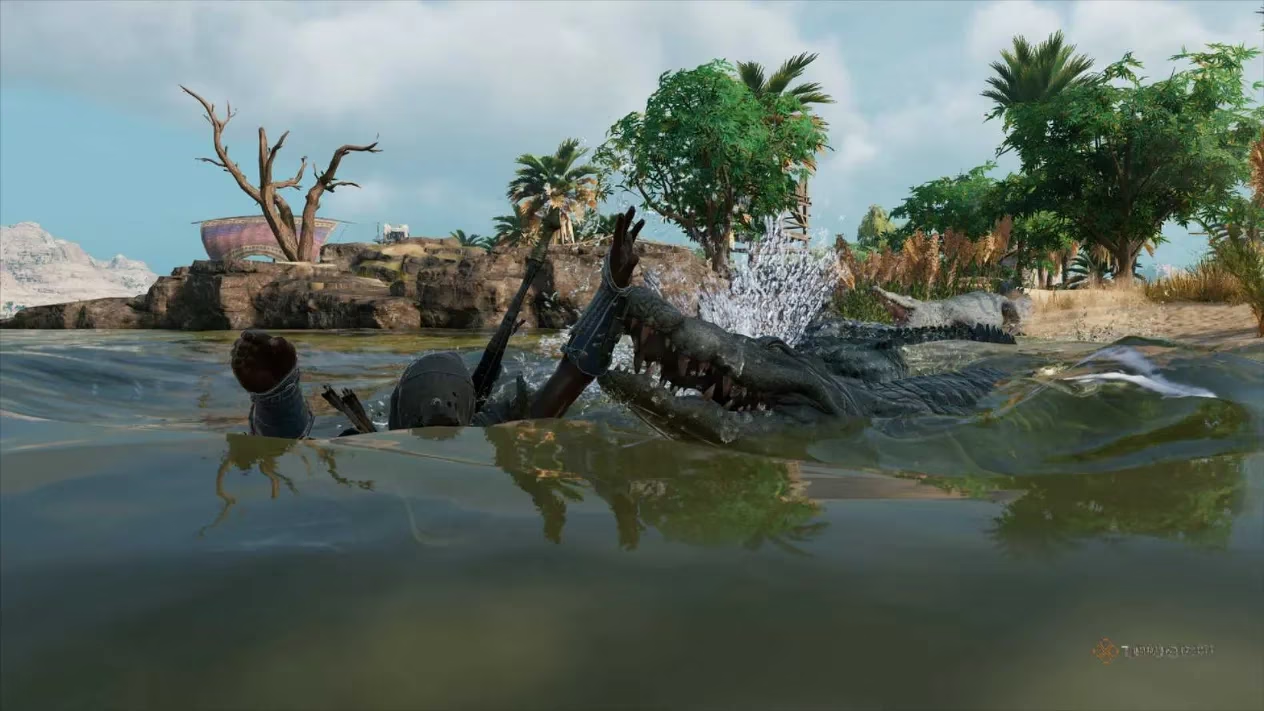
Part of this stark emptiness stems from a literal lack of life. Shadows' ecosystem is anemic. Save for a handful of passive animals, the only threats are human (or supernatural). This makes the wilds feel safe, predictable, and curiously unfinished. You'll hear the mournful howl of wolves echoing through valleys—a promise of danger that is never fulfilled. In Origins, the world bites back. Bayek must contend with lions stalking the reeds, venomous snakes in the ruins, and territorial hippos in the Nile. These encounters transform the open world from a travel route into a consistent source of tension and discovery. Shadows possesses bears, boars, and badgers in its codex, yet their absence from the gameplay loop makes Japan's forests feel as threatening as a curated zen garden.
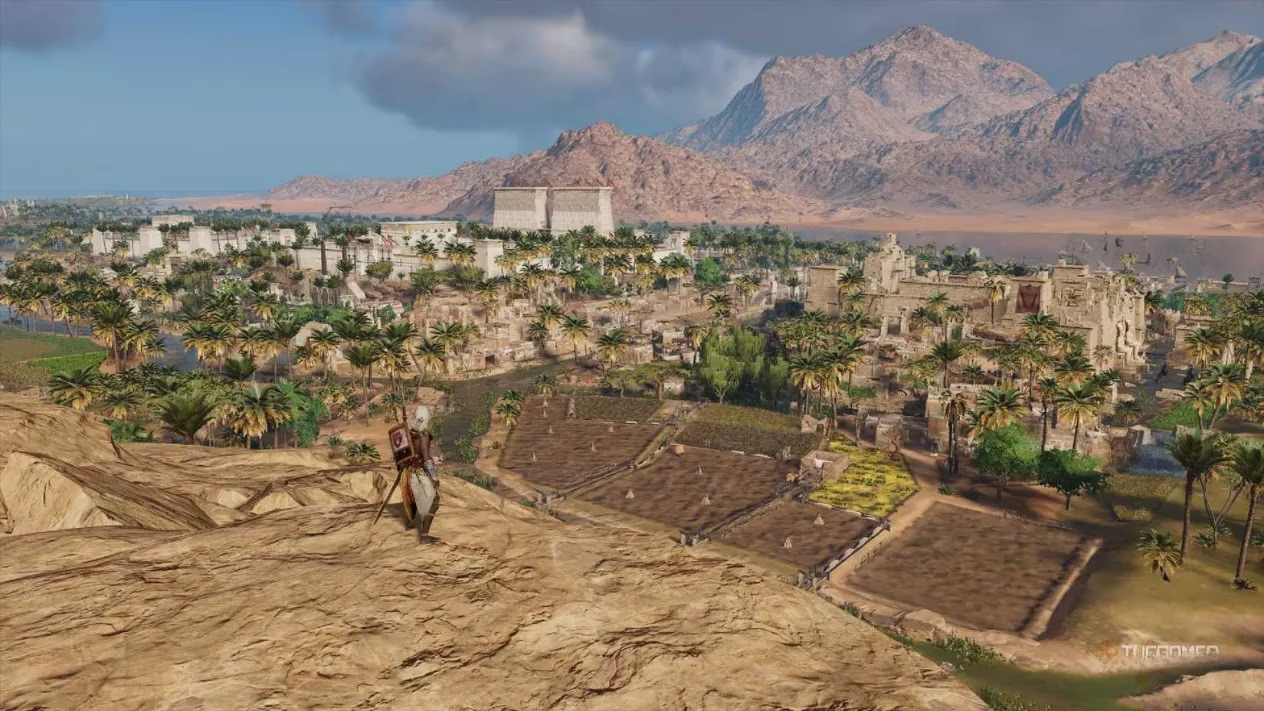
The fundamental difference, I believe, lies in intent. Origins was Ubisoft's high-stakes gamble to reinvent the franchise. It took a crucial year-long hiatus, breaking the annual cycle, to ensure its world was dense, cohesive, and alive—a living tapestry woven with detail. The result was a setting that felt historically grounded and dynamically unpredictable. Shadows, despite its own development delays, seems to have focused its lessons primarily on refining moment-to-moment gameplay systems while letting the world-building atrophy. It forgot that in an Assassin's Creed game, the setting is not just a map; it is the soul. A great location is a character that tells its own story through its geography, its inhabitants, and its dangers.
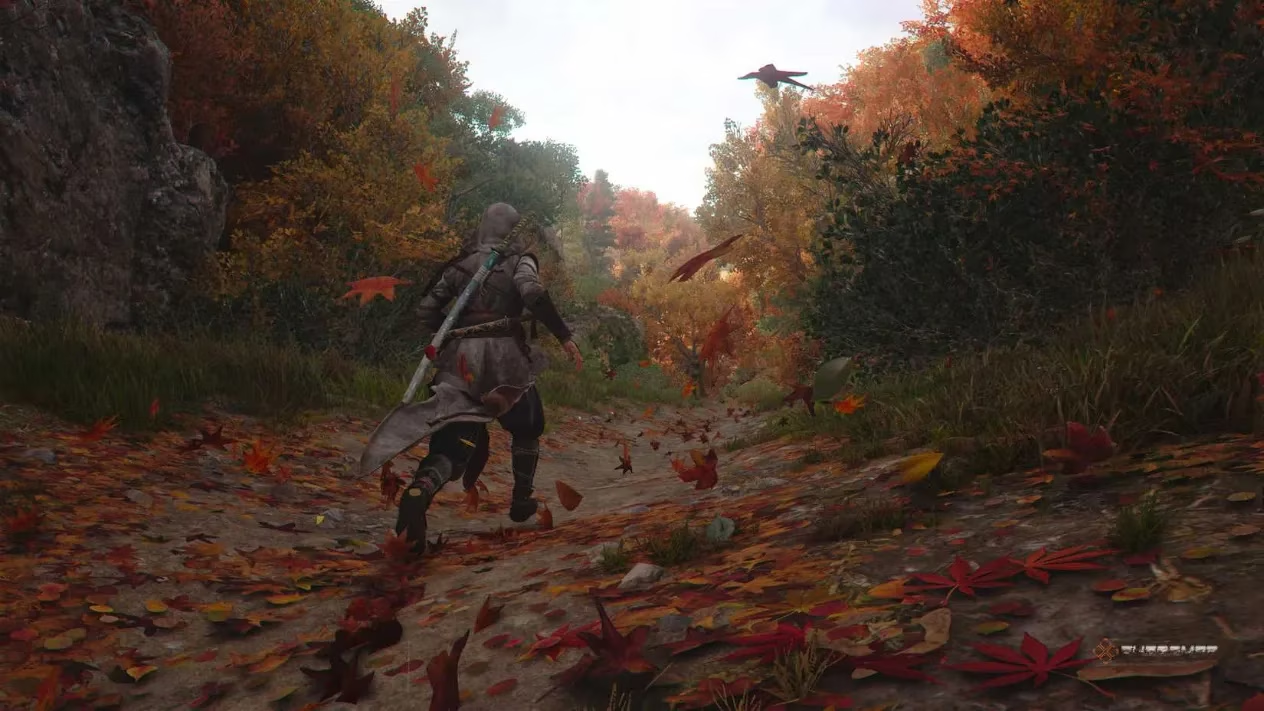
In 2026, Kansai had the potential to be one of the series' most iconic locales. Instead, it stands as a cautionary tale. The experience has left me with a profound irony: I feel less spiritually drained by the Egypt I've revisited for years than by the Japan I fully conquered in a matter of weeks. Origins built a world you want to get lost in, even when the quests are done. Shadows built a checklist you want to escape once it's completed. For all its mechanical advancements, Shadows is like a masterfully crafted katana displayed in a sterile museum case—beautiful to look at, impressive in theory, but you never feel its weight or see it truly tested. Origins, meanwhile, remains the well-worn, sand-scarred hidden blade you keep returning to; it has a history, a soul, and a world that still feels dangerous and wondrous to explore.