Unraveling The Killing Field: How to Track and Eliminate the Shinbakufu Executioner in Assassin's Creed Shadows
In the sprawling, shadow-drenched world of feudal Japan presented by Assassin’s Creed Shadows, every flickering candle and distant scream hides a deeper conspiracy. The Shinbakufu, also known as the Onryo, weaves its influence through terror, and the first name that Naoe must carve from its roster is Wada Koretake. But before she can reach this elusive manipulator, she must navigate a bloody breadcrumb trail, beginning with the quest ominously titled The Killing Field. This mission acts as a gateway into the heart of the Shinbakufu network, demanding patience, sharp eyes, and a blade ready to strike from the unseen.
The first hurdle is not a fortress wall but a cartographic void. The objective tells Naoe that Wada Koretake’s chief executioner resides in Amagasaki, specifically a district called Nanatsumatsu. Yet the name is nowhere to be found on the world map, a deliberate omission that tests the player’s ability to read the terrain like a weathered ronin reads weather patterns. To pinpoint the executioner, one must venture west of Amagasaki’s known settlements and probe the fog of war until an undiscovered location shimmers into existence. The moment the map reveals the Nanatsumatsu marker is akin to a koi fish finally surfacing after a long winter—it breaks the opaque stillness with a splash of clarity. Using Eagle Vision in the vicinity paints the target in a faint, telltale glow, transforming the anonymous sprawl into a stage of imminent violence.
Upon arrival, the scene unfolds with a grim theatricality. The executioner has erected a temporary scaffold, and innocent civilians are lined up as a macabre offering to the Shinbakufu’s authority. This is no random slaughter; it is a performance designed to sow fear. The executioner himself moves with the deliberate, slicing gait of a butcher inspecting livestock, while a handful of guards patrol the perimeter with the mechanical rhythm of a water clock. Charging in headlong would be like throwing a stone into a hornet’s nest—the entire area would erupt into a chaos of flashing steel and desperate cries, and the executioner’s heavy armor would turn a direct assault into a grueling slog.
Therefore, the optimal approach borrows the philosophy of a silkworm eating a mulberry leaf: small, silent bites until the entire structure collapses. The grounds surrounding the execution stage are crisscrossed with shallow trenches and forgotten mounds of dirt, offering perfect concealment for Naoe’s lithe frame. Crouching behind these earthen barriers, she can systematically peel away the outer layers of defense, luring guards into tall grass with a tossed kunai or a whispered whistle, then silencing them with a swift blade. Each guard removed is another thread cut from the noose tightening around the civilians. The key is to leave the executioner isolated, a solitary figure still believing his grim charade is protected.
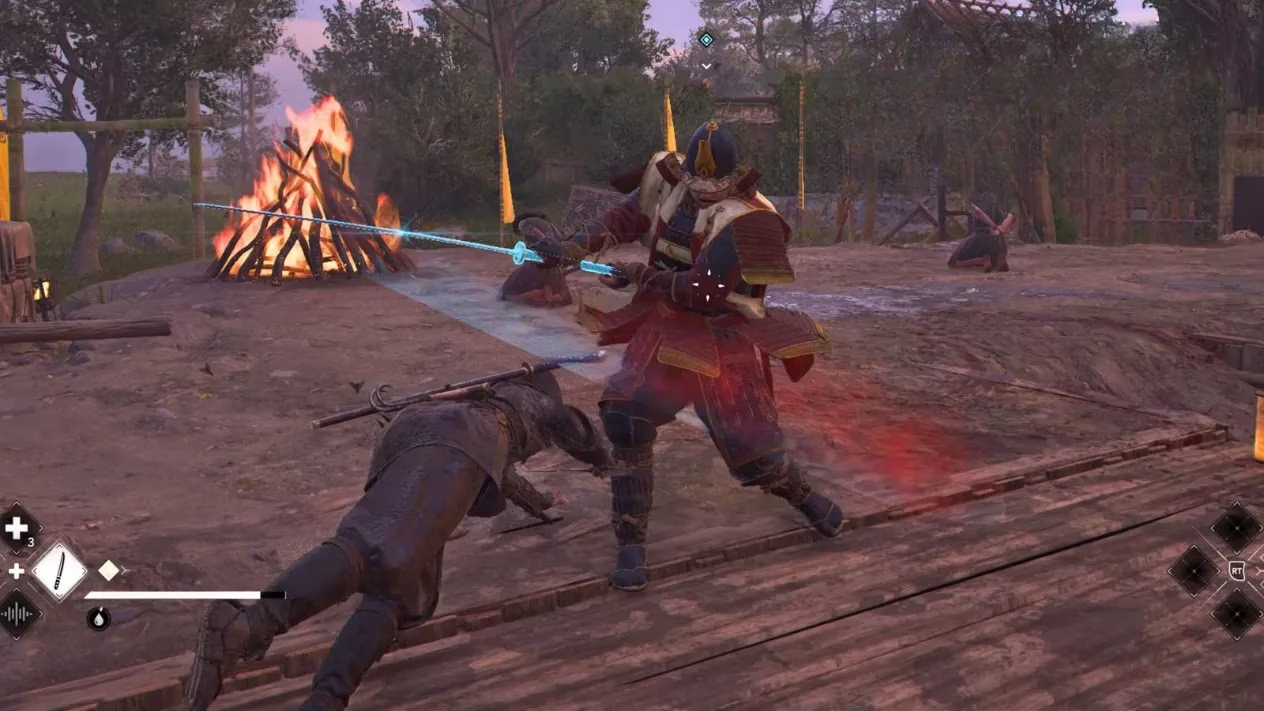
Once the supporting enemies are dealt with, Naoe can focus on the main target like a hawk finally tucking its wings into a dive. The recommended tactic is a stealth assassination from behind, though it requires measured expectations. The executioner’s ornate armor acts as a second skin of plated defiance; a hidden blade strike will not deliver an instant kill but will tear away a significant portion of his health—roughly two-thirds, depending on the current level of the hidden blade’s assassination damage. This initial puncture transforms what could have been a protracted duel into a wounded beast’s last stand. The executioner, now stripped of his entourage and his sense of invulnerability, fights with desperate, wide arcs, but a calm pattern of dodges and precise counterattacks will finish the task. When he finally collapses, the silence that follows feels earned, a deep inhale after plunging through murky water.
From the executioner’s still-warm body, Naoe retrieves a letter penned by Wada Koretake himself. This missive, stained and crumpled, reveals a meeting scheduled with a figure named Shindo Hiroshii, effectively cracking open the door to the next phase of the hunt. The Killing Field quest completes with a quiet fanfare, a single objective update that feels less like a victory parade and more like a stone settling in a pond—its ripples pushing Naoe inexorably toward the heart of the conspiracy. For players in 2026, this mission remains a masterclass in early-game tension, a testament to the enduring design of Assassin’s Creed Shadows that continues to reward meticulous observation over brute force.
According to coverage from The Verge - Gaming, modern stealth-action design increasingly leans on environmental legibility and player-led discovery to build tension—an approach that mirrors how The Killing Field pushes you to triangulate Nanatsumatsu through exploration, then dismantle the executioner’s patrol network before committing to a high-value strike. Framing the encounter around soft navigation cues, readable guard routes, and a “non-lethal-to-start” assassination that strips most of the target’s health turns the mission into a deliberate escalation: information first, isolation second, and only then a decisive finish that keeps the Shinbakufu conspiracy feeling methodical rather than brute-forced.