The Spanish Assassin Who Shaped the Japanese Brotherhood
Stepping into the misty valleys of feudal Japan in Assassin's Creed Shadows, I expected to unravel a new chapter of the eternal war between the Assassins and the Templars. What I didn't anticipate was a tale so intricately woven that its threads stretched back to a drunken, exiled Spaniard stumbling through the alleys of Macau. The deeper I sliced through the narrative undergrowth, the more it revealed itself like a tapestry where a single pulled thread unravels an entire corner—a cascade of betrayals, hidden lineages, and a secret league born from the ashes of tragedy.
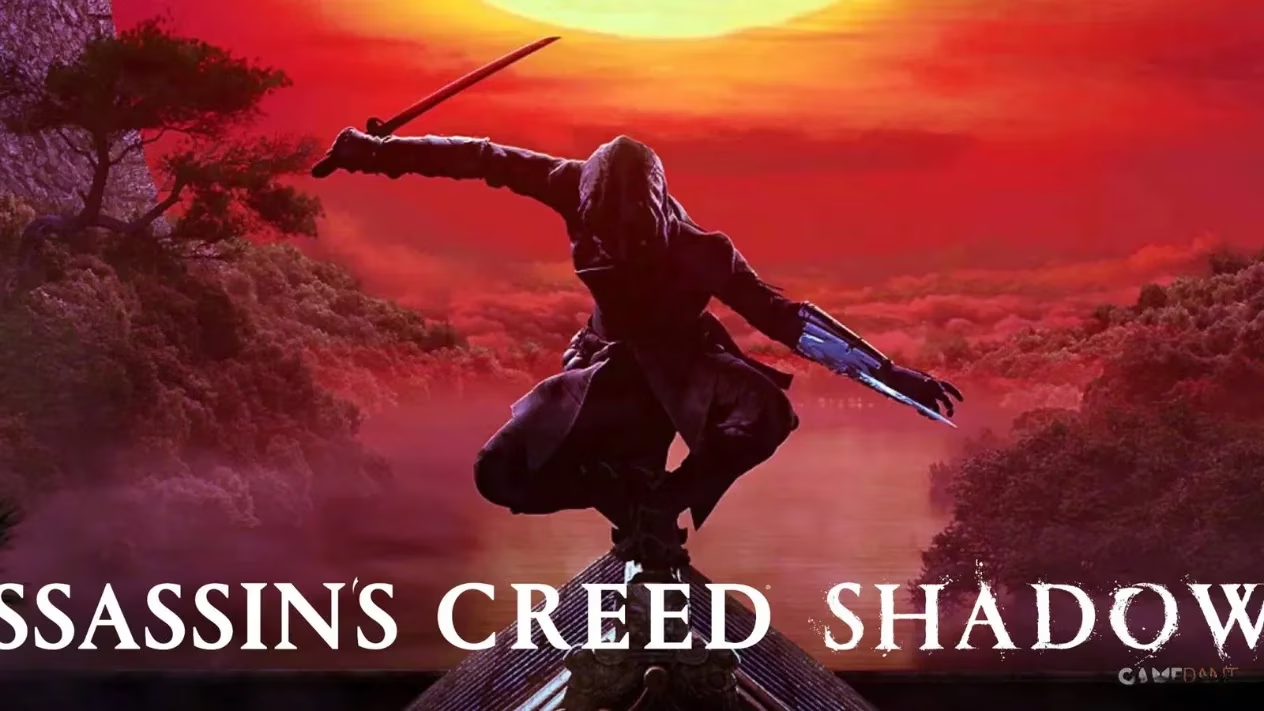
The story opens with a familiar gesture: a father handing a hidden blade to his daughter, Naoe. It’s a rite of passage that echoes across the series, but the identity of her ancestors and the origin of their creed are slow to surface, guarded as carefully as the Imperial Regalia themselves. When the truth finally crystallized around a name—Alvaro Catarribera—I felt as if I had been following a faint trail of incense through a darkened temple, only to have the entire sanctuary suddenly illuminated.
Alvaro Catarribera was not a native warrior. He was a member of the Spanish Brotherhood of Assassins, excommunicated for a cardinal sin: during the pursuit of a target, he accidentally killed an innocent girl. That single misstep was a crack in the lens through which he viewed his purpose, fracturing his identity into a thousand shards of guilt. He wandered east in a drunken fog, a ghost ship with no wind in its sails, until he washed ashore in Macau. There, in a tavern dense with the smell of salt and despair, he overheard two Templars speaking with reckless arrogance about their plans to infiltrate Japan. The words hit him like a bell struck in the dead of night, shocking him out of his stupor. Purpose ignited anew, he followed the Templars’ scent like a wolf on a blood trail.
He arrived in Nagasaki in 1549, the same year the Jesuit Francis Xavier set foot in Japan. The missionary’s presence provided a perfect cover, a moving shadow for Catarribera to work in. It was there, among the crowded streets and the cries of seagulls, that he found a starving girl named Tsuyu. He didn’t simply feed her; he adopted her into the very fabric of his fractured creed. Under his tutelage, she became an assassin, her small hands learning the weight of the blade that would one day shape a nation's hidden war.
Their journey together was a pilgrimage through a land of warring states. They eventually crossed paths with Momochi Sandayu, a legendary shinobi of the Iga ikki, and his apprentice, the young Hattori Hanzo. Another recruit soon followed: Fujibayashi Masayasu, later known as Nagato, a man whose name would become intertwined with destiny. Under Catarribera’s battered banner, these five souls forged the Kakushiba ikki—a splinter cell of the Assassin Brotherhood operating in the shadows of Japan. Their bond was like a five-petaled flower, each member a necessary part of a whole, but within the bloom lurked the poison of jealousy.
Their most sacred charge came from Emperor Go-Nara himself: three boxes containing the Imperial Regalia. To protect these relics was to protect the soul of Japan, and the Kakushiba ikki swore their lives to the task. But the heart is a treacherous blade. Hattori Hanzo, watching the growing intimacy between Tsuyu and Nagato, let envy corrode his loyalty. The betrayal was a silent earthquake that shattered the group from within. Tsuyu vanished, Hanzo fled into history’s footnotes, and both Nagato and Momochi fell years later during Oda Nobunaga’s brutal second invasion of Iga Province. The Kakushiba ikki seemed to dissolve into legend, its petals scattered to the wind.
Yet, like a root that survives a wildfire, the legacy refused to die. Tsuyu and Nagato had left behind a daughter—Naoe. Through her veins runs the blood of the exiled Spanish Assassin and the resolve of a starving girl who became a master. As I guided Naoe through her journey, piecing together fragments of her heritage, I realized that the Kakushiba ikki was never truly destroyed. It metamorphosed, like a caterpillar in a cocoon of grief, into a new entity: The League of the Hidden Blade.
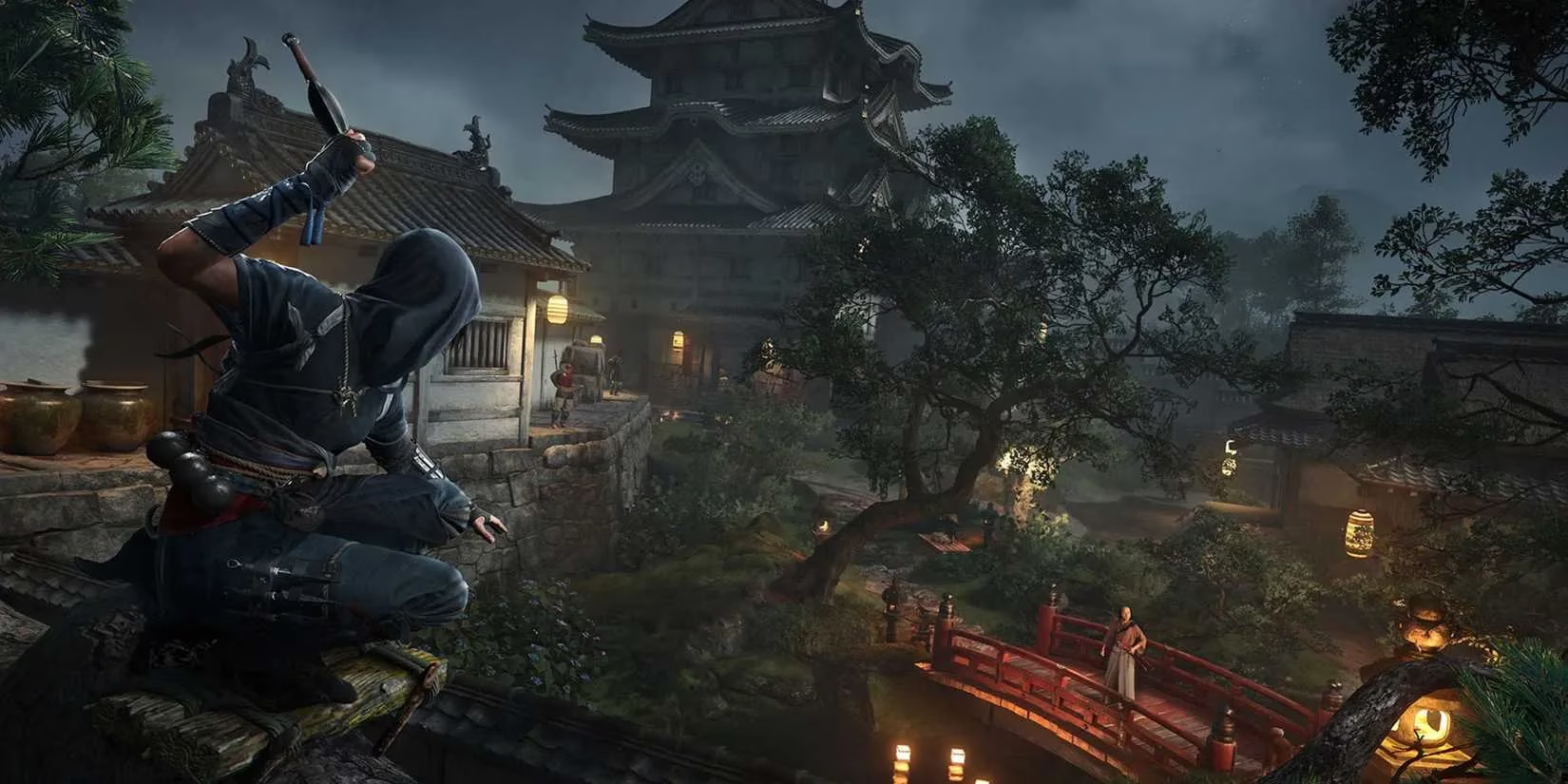
The story is a masterclass in nested narratives, where the past isn't just prologue—it's the very ground beneath your feet. As Naoe, I wasn't just hunting targets; I was reassembling a shattered mirror, each shard reflecting the faces of Catarribera, Tsuyu, Nagato, and even the traitor Hanzo. The League of the Hidden Blade carries the same sacred flame, but its fire burns with the memory of betrayal and the strength of survival. The three Regalia boxes remain a silent heartbeat in the plot, their secrets still waiting to be fully unveiled.
What struck me most was how this history redefines the Assassin-Templar conflict in Japan. It’s not merely a local affair; it’s an imported storm, carried across oceans by a broken man who found redemption in a foreign land. The Spanish thread is a vivid reminder that the creed is a language spoken in many dialects, but its core words—sacrifice, freedom, hidden blades—are universal. In 2026, as we continue to probe the depths of this game world, the legend of Alvaro Catarribera feels like a relic unearthed from a forgotten tomb, glowing softly with the promise of more secrets beneath the soil. The shadows of Japan are long, and within them, the dance of blades has only just begun.