The Butterfly Collector: A Guide for Origami Sleuths
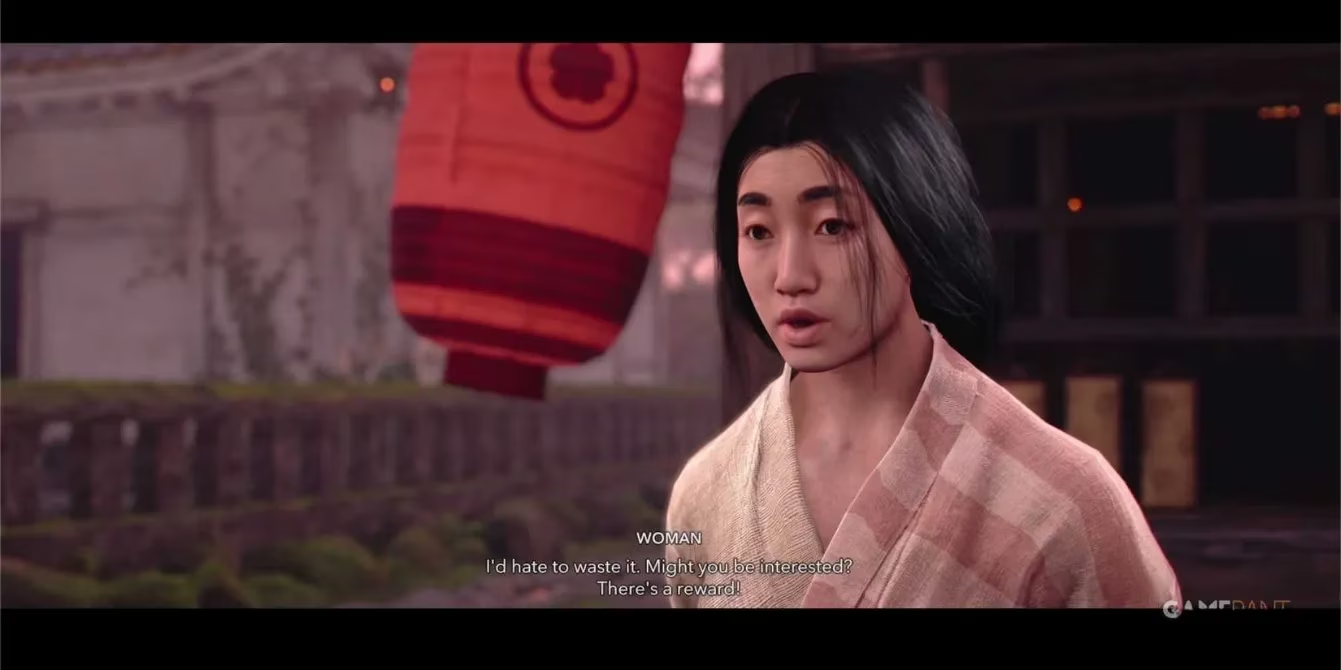
When I first stumbled into Katano, just a stone's throw from the brooding silhouette of Katano Castle, I was expecting the usual fare: a lost delivery, a disgruntled merchant, maybe a missing cat with a surprisingly complicated family tree. Instead, I met a young woman so brimming with whimsy she could have been a walking haiku. She called herself the Gamemaker, and her request was deceptively simple: find ten origami butterflies pinned to trees around western Osaka. It sounded like a serene treasure hunt, the kind of thing that makes you feel like a well-armed botanist with a fondness for paper crafts. I had no idea I was about to plunge into a conspiracy that unwrapped itself like a poisonous gift inside a dozen nested boxes.
The first leg is pure scavenger hunt bliss, assuming your definition of bliss involves squinting at bark textures for half an hour. The butterflies are stuck to trees like nature’s own post-it notes, and I became a sort of demented lepidopterist, crashing through underbrush and startling peasants. At the Temple of Osaka, butterfly number one sat on a tree in the northeastern corner, practically glowing with hidden significance—a little paper shuriken of plot.
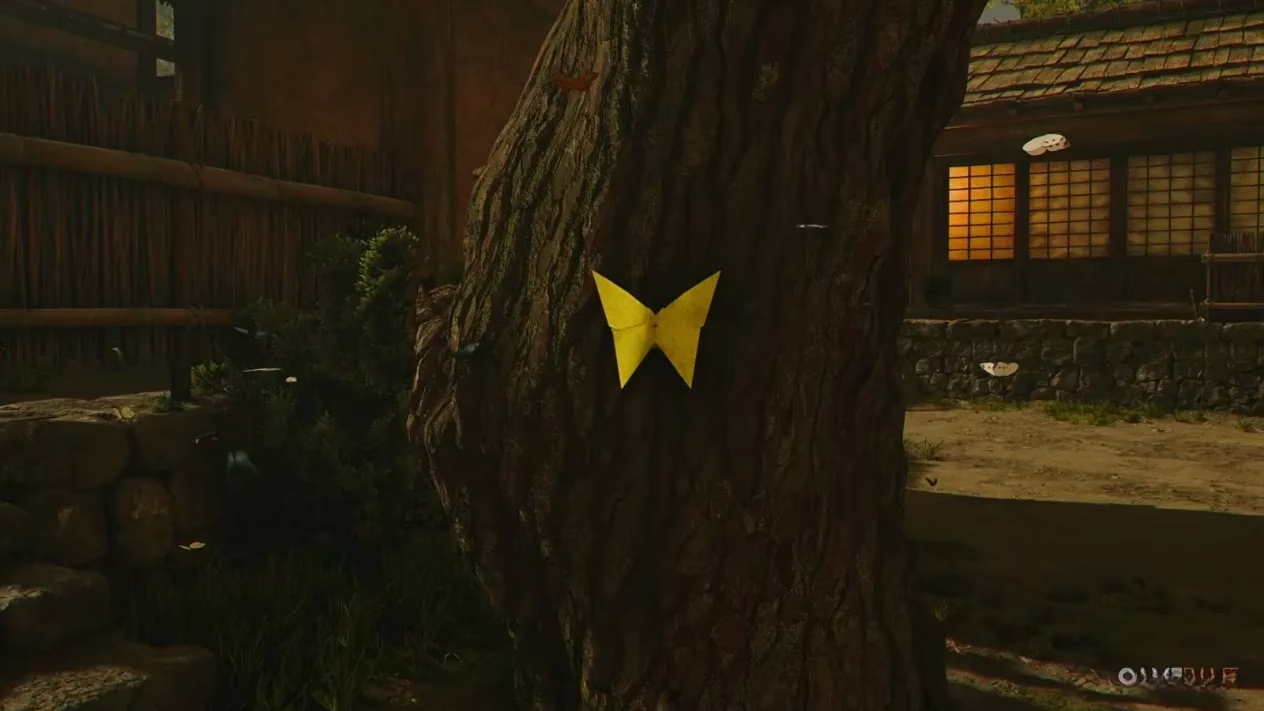
The second was tucked behind a Torii gate in a fenced garden, like a sacred secret you had to earn by simply opening your eyes. The third and fourth flirted with the shorelines, forcing me to skulk between fishermen’s huts and high weeds. It was on butterfly four, nestled among riverbank grass, that the tone shifted. Tucked into its fold was a Secret Origami Letter from someone named Shucho—a child’s frantic cry for help. Suddenly my cheerful paper chase felt like discovering a distress flare hidden inside a birthday card.
I kept going, of course, because nothing says ‘responsible protagonist’ like ignoring a kidnapping to finish a collection. Butterfly five required a fence jump into a backyard, where I stood for a moment feeling less like an assassin and more like a nosy neighbour. Butterfly six, high on a trunk by the central bridge, carried another letter from a Richo. At this point, my inventory was starting to look like a sad mailbag.
The seventh butterfly clung to a tree near the Gear Vendor, silent but accusatory. The eighth, buried in shoreline bushes, held a message from a Mucho, as if each note were peeling back a layer of this awful onion. The ninth hid in the southwestern corner, staring across an inlet like a papery smuggler. The tenth sat at the eastern tip of the island, the final stamp in my morbid passport. I had all ten butterflies. The hunt was done. Time for my prize.
Except, of course, there was no prize waiting. When I returned to the spot where the Gamemaker had stood, she’d vanished like morning mist, or like a quest giver who knows exactly what kind of mess she’s about to drop on you. Her disappearance acted as a narrative tripwire. All those letters hadn’t been craft projects; they were breadcrumbs leading to a child abduction ring, and I’d been their delivery system. The game’s Objectives board now hosted a new wheel—the Butterfly Collector wheel—and it was spinning with four new names. This cheerful little side quest had morphed into a hit list, like a mood board that only a murderous origami artist could love.
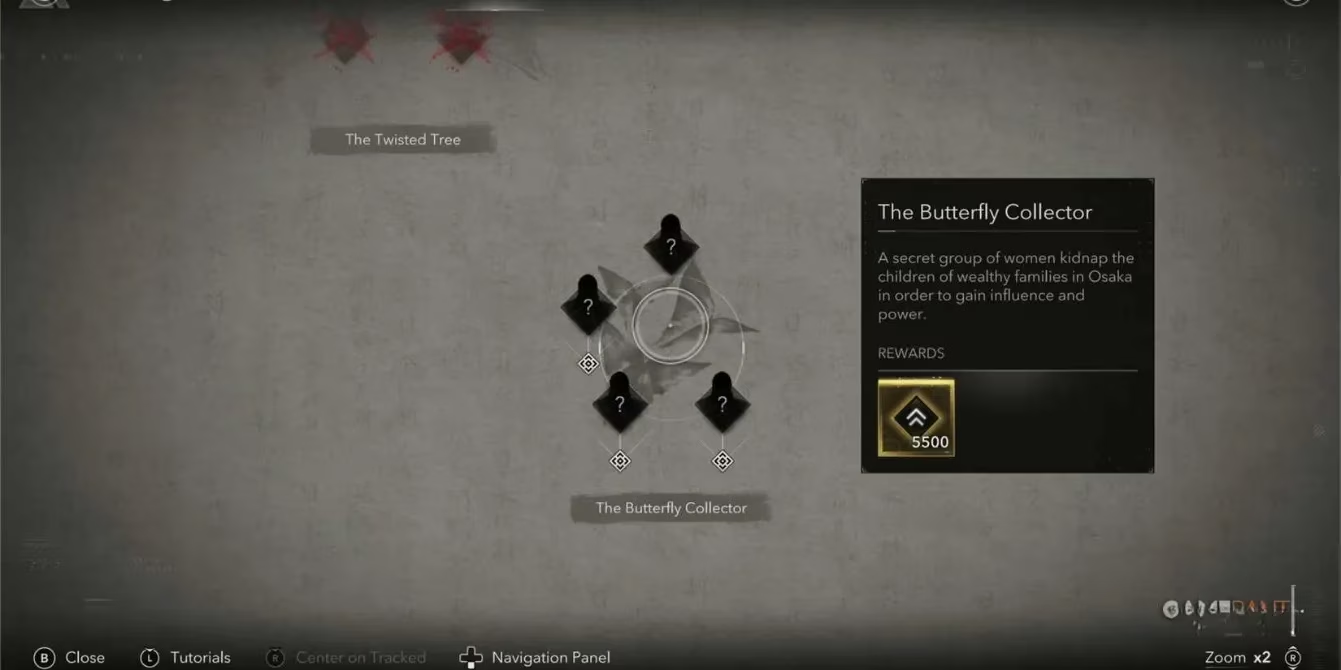
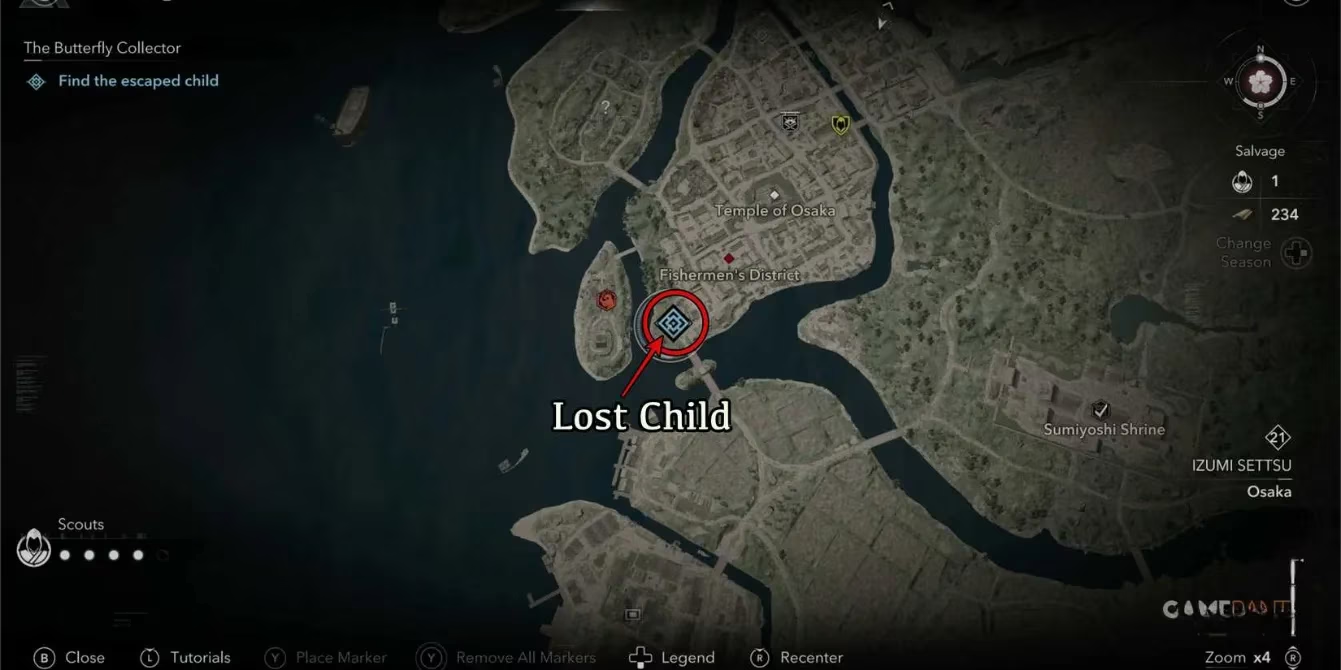
The first target was Shucho, tied to a quest called “One That Got Away.” I found her by first stumbling upon a missing child in a stable in southwestern Osaka. The kid ran home, and as I watched, my Observation mode lit up like a festival lantern: there was Shucho, tailing the very child she’d lost. I’ve rarely felt such a satisfying blend of moral outrage and mechanical convenience. A quick assassination later, and the first domino fell. Rewards? An Ink Spiller Tanto, a mastery point, some mon, and enough XP to remind me that justice pays.
Next came Mucho, caught red-handed trying to snatch a child just over a bridge north of Osaka. I interrupted her abduction like a grim librarian demanding silence. The fight was brief, the child was freed, and I even earned a bonus follow: escorting the boy back to his father unlocked “Home and Dry” and the promise of a trail leading to the ring’s leader. Mucho dropped a Hidden Pleat Tanto, and honestly, the blade’s name felt like a commentary on how easy it had been to find her.
Richo required a more poetic approach. First, a well in the northern ruins, where I eavesdropped on a gardener gossiping about a strange woman. Then, a bamboo grove north of Noda Village, where I found Richo lounging outside a cabin like a villain on vacation. I crept up, delivered the world’s quietest goodbye, and then opened the cabin door to find another child inside. That kid gave me a Trinket of Childlike Bravery—an amulet so sweetly named I nearly forgave the entire kidnapping industry. It also came with a Dog-Ear Tanto and a warm feeling that could only be described as ‘I have too many knives now’.
Finally, Kacho. But before I could reach her, I had to untangle two more threads: “Paper Trail,” which sent me to a paper merchant north of the temple, and “Chrysalis,” which guided me to a warehouse full of incriminating letters. These quests felt like assembling a court case out of sarcastic stationery. Kacho herself was holed up in Nishinomaru Garden, west of Osaka Castle, a restricted zone that hummed with the threat of armoured guards. I slunk through, expecting a stealth kill, but the game had other plans. A cutscene triggered. Words were exchanged. Then, a brisk boss fight that ended with Kacho on the ground, spilling secrets even as her health bar drained. It turned out she wasn’t the absolute end of this papery nightmare, but she was certainly the most satisfying piece to remove.
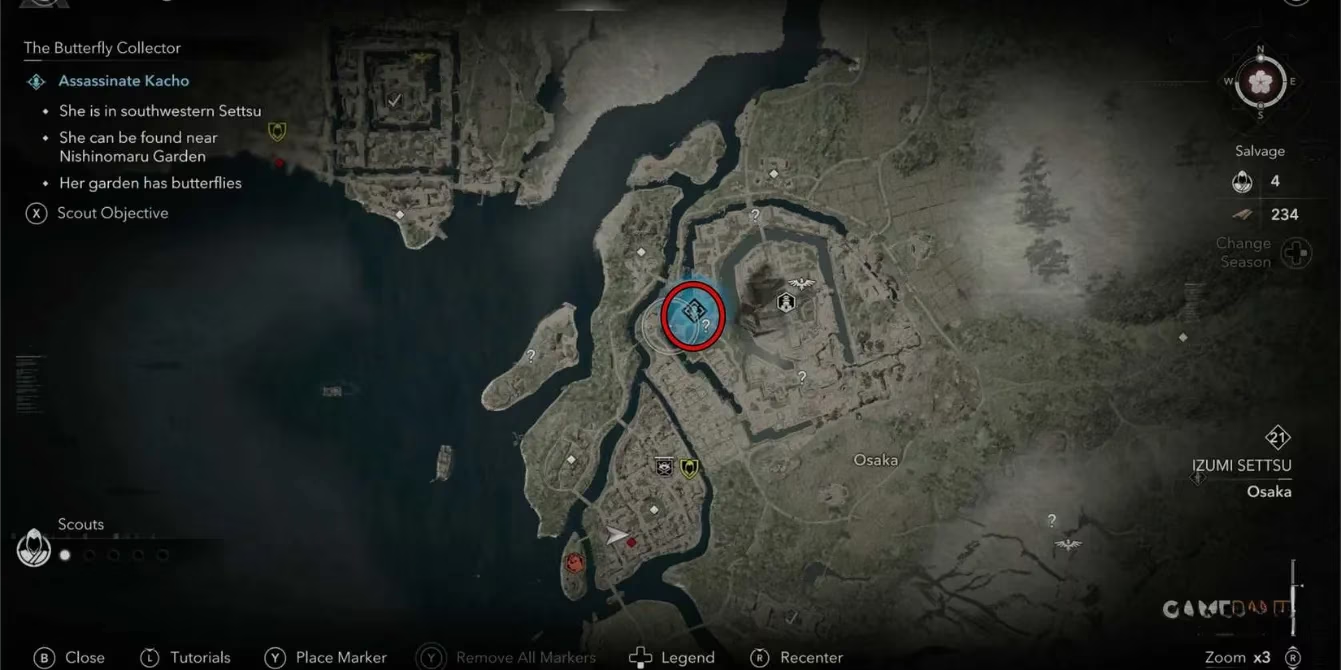
With Kacho defeated, I returned to the Gamemaker, who had apparently been playing a long game of hide-and-shirk. She confessed her involvement—victim and accomplice, tangled in a tragic complicity. Then came the choice: spare or kill. Now, I’m no stranger to moral quandaries in video games, but this one was wrapped in a unique incentive. Sparing her grants the Butterfly of Benevolence, a rare trinket whose engraving remains a mystery I’m still trying to decipher (something about hidden damage or possibly a discount at paper shops, I can’t tell). Killing her gives you… the satisfaction of a brief, joyless button press. Even my inner cynic couldn’t argue with the math. I let her live, collected my Ebisu’s Gamble Rare Bow, a wedge of mon, experience points, and a lingering sense that origami would forever feel ominous.
Looking back, “The Butterfly Collector” is the kind of side quest that uses the word ‘butterfly’ to mean about seven different things: decoration, clue, metaphor for stolen children, and ultimately a choice of mercy. It starts as a scavenger hunt so innocent you’d expect a participation trophy, and ends with you staring down a kidnapped kid’s captor while clutching a tanto named after a paper fold. The whole chain is a lesson in how a game can turn a simple collection mechanic into a conspiracy kaleidoscope—twist the tube once, and suddenly you’re not looking at colorful shapes; you’re looking at a network of monsters. Now if you’ll excuse me, I need to go explain to a local paper merchant why half his inventory is now classified as evidence.