My Therapist Said I Needed Closure, But Assassin’s Creed Keeps Reopening the Same Wound
I’ve spent 70 hours in Feudal Japan, and yet I still can’t shake the feeling that I’ve been here before—not just in a past-life regression sense, but in a “wait, didn’t my last three video game dads also bleed out in my arms?” sense. Assassin’s Creed Shadows is a sprawling, gorgeous epic. The main story takes anywhere from 30 to 50 hours, and if you’re a chronic side-quest hoover like me, you’ll easily push north of 70. Ubisoft has stuffed this thing with enough gear, skills, and narrative threads to weave a kimono. But for all its mechanical freshness, that story opening hit me like a déjà vu sledgehammer wrapped in a slightly altered haiku.
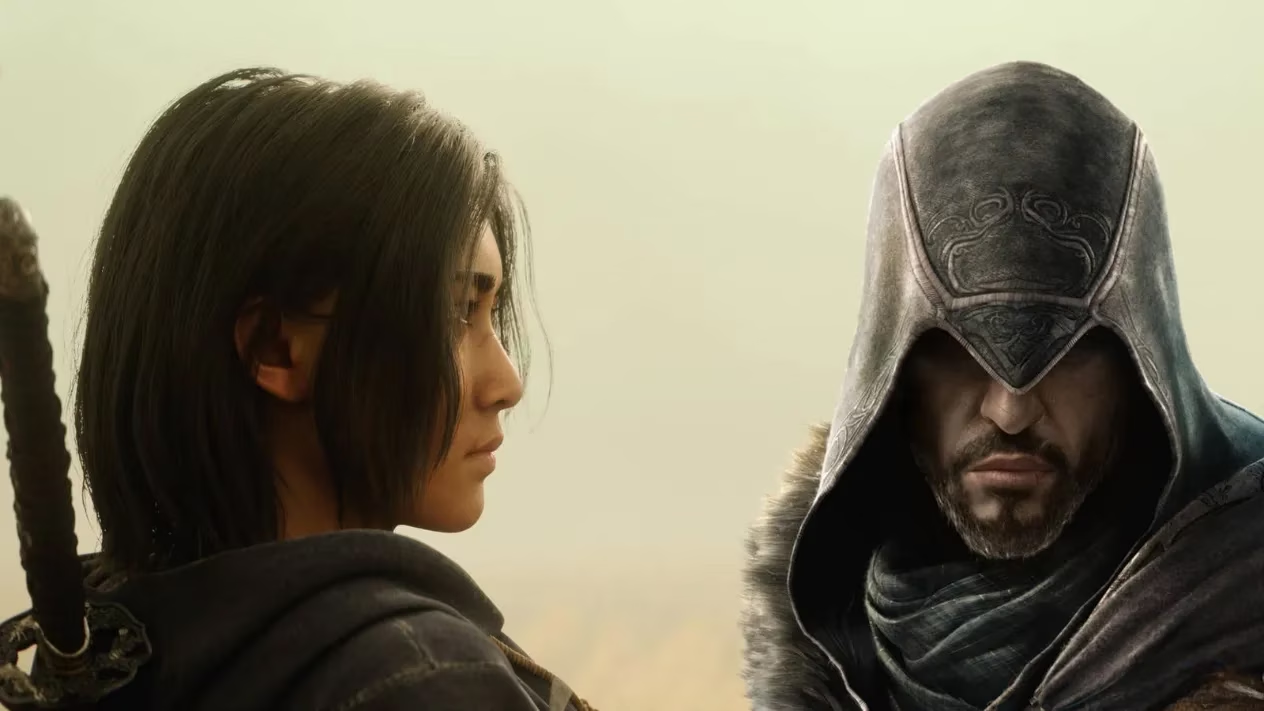
The prologue plays out with the precision of a grief-dispensing vending machine. You start as Yasuke, the legendary African samurai, hacking through a rebellious Iga province under the banner of Oda Nobunaga. It’s brutal, beautiful, and then—abruptly—you’re Naoe, a young shinobi racing toward her burning village. Her father, Nagato, sends her to retrieve a mysterious box. A masked man steals it. She assassinates him, recovers the box, but takes an arrow to the torso during her escape. Nagato arrives, saves her, and then gets surrounded. He’s mortally wounded while Naoe watches, powerless. With his dying breath, he whispers that classic video game dad koan: “Follow the blade.” Title card. Cue revenge.
Now, I’m not saying this opening is bad. It isn’t. The performances are heart-wrenching, and the mask designs of the Shinbakufu are so unsettling they could moonlight as sleep paralysis demons. But the moment that title dropped, my brain performed a rapid-fire montage of Assassin’s Creed trauma: Ezio watching his father and brothers swing from a noose, Connor’s village burning with his mother inside, Arno getting blamed for his adopted father’s death, Bayek cradling his dead son, Eivor losing both parents in a single banquet-hall betrayal. This series treats paternal demise like a narrative gym membership—you can’t start the journey without it.
It’s as if Ubisoft has a giant drawer labeled “PROTAGONIST MOTIVATION,” and inside is a single, yellowed index card that reads: Kill dad. Start stabbing. They’ve been photocopying it since 2009. The setup is now such a reliable narrative ingredient that I’m convinced there’s a Templar plot to corner the market on orphaned assassins. If I lined up all the AC protagonists, they’d form the world’s most lethal support group, where everyone nods solemnly and someone says, “My father died in a cutscene too. The camera even tilted up the same way.”
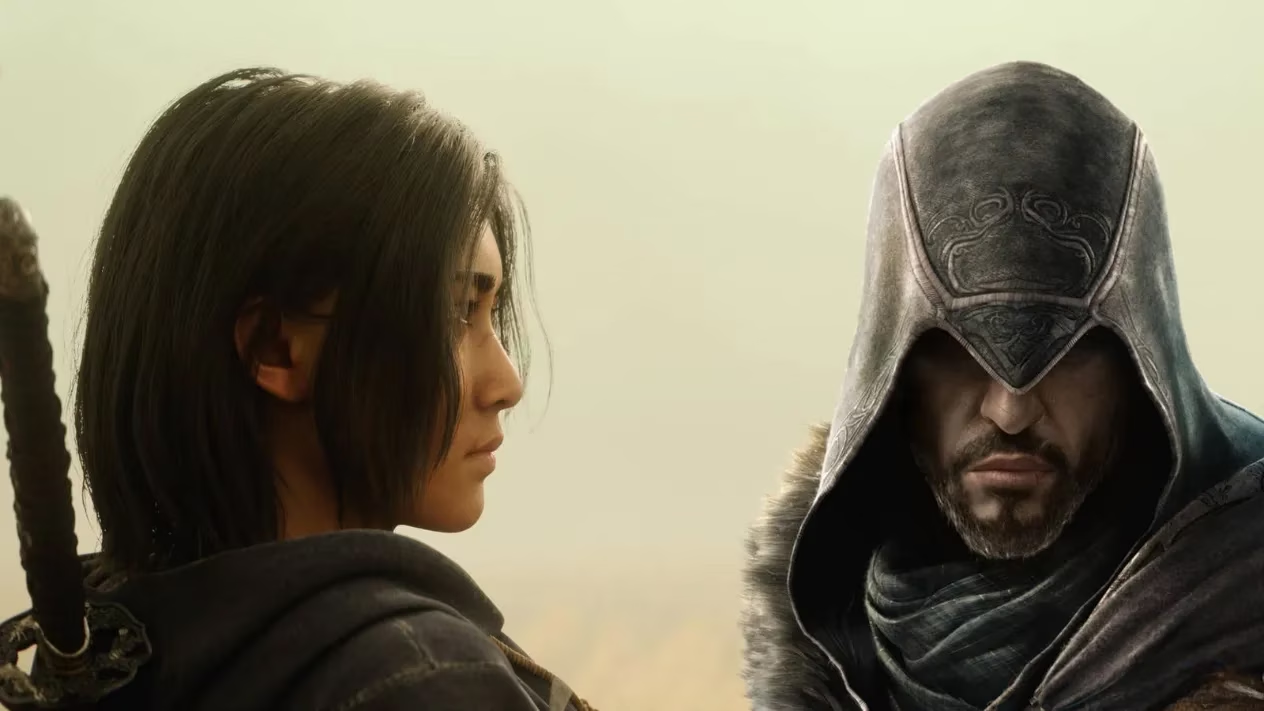
But here’s the thing: the familiarity is also the game’s emotional memory foam. It contours to your expectations with startling comfort. Naoe’s grief lands not because it’s novel, but because the franchise has spent years conditioning us like Pavlov’s assassins to salivate at tragedy. The bond between Naoe and Nagato feels genuine, partly thanks to the voice acting—Naoe’s rapid, gasping breaths as she tries to stem the bleeding feel less like a performance and more like a window into someone genuinely losing their tether. The masked killers surrounding them, with their porcelain-like expressions frozen in ritualistic fury, add a layer of uncanny horror. It’s like being jumped by a Noh theater troupe who’ve decided your village is tonight’s encore.
I’ve also come to view the opening’s predictability as a kind of narrative homing pigeon. No matter how far the series strays—whether we’re sailing the Greek islands or scaling English cathedrals—that specific blend of cinematic loss and cryptic final phrases always brings us back to the core loop: a single protagonist, a hidden blade, and a to-do list of people who were probably at that village that night. It’s a thematic anchor that says, “Relax. You’re playing Assassin’s Creed. Someone important just died. Get your vengeance boots on.” And I’d be lying if I said I didn’t feel a thrill when Naoe’s father told her to follow the blade. I knew exactly what would happen next—I’d find a town, scope out a target, and start methodically dismantling a shadowy organization—but the ritualistic repetition felt less like lazy writing and more like opening a battered hardcover of a novel you’ve read five times because the spine feels right in your hands.
That said, my therapist did suggest I vary my emotional intake. So when I booted up Shadows, I was hoping for a tiny subversion. Maybe Dad gets kidnapped instead of d-dead. Maybe he reveals he’s actually a Templar sleeper agent who really loves macramé. Instead, Nagato’s final words were the metaphysical equivalent of a fortune cookie message: vague enough to apply to any broken person, specific enough to drive a whole sequel. “Follow the blade.” I’ve been following blades so long I could draw a world map of lost fathers with my eyes closed.
Still, 2026 me has made peace with this. I’ve accepted that Assassin’s Creed’s emotional palette starts and ends with the “murdered mentor” shade of grief. It’s like a messy, well-worn leather jacket that still looks cool in the right light. Yes, it’s threadbare in places and smells faintly of 15th-century hay, but you put it on and suddenly you’re ready. The game rewards you for pushing through that familiar pain: a constantly refreshing arsenal, armor sets that make Naoe look like an ink painting in motion, and a story that, once past the introduction, finds its own voice within the shadows of history. So I’ll keep strapping on my hidden blade and kissing another virtual dad goodbye. Just once, though, I’d love to get a protagonist whose father is alive, retired, and sends encouraging texts like “You paralytic-darted the wrong guard lol—u got this.” Until then, I’ll follow the blade. It’s been leading me home for over a decade.
In the end, Assassin’s Creed Shadows is a reminder that the franchise is a master chef who only knows one recipe—sorrow flambé—but they cook it so damn well you’ll ask for seconds. And when the credits roll, you’ll realize that following the blade isn’t just Naoe’s quest; it’s a pilgrimage every fan has been on since 2009, one tear‑soaked origin story at a time.