How Assassin's Creed Shadows’ Yasuke Reflects Real Sengoku Name-Changing Traditions
I have spent countless hours slicing through feudal Japan in Assassin’s Creed Shadows, and one of the most striking narrative choices isn’t a hidden blade assassination or a dramatic castle siege – it’s a quiet, deeply meaningful scene where the protagonist Diogo is renamed Yasuke. At first glance, it might seem like a simple plot device to signal a fresh start, but as I dove deeper, I uncovered a fascinating cultural truth that adds immense weight to the journey. That name change is rooted in genuine 16th-century Japanese practices of cultural assimilation, and it transforms what could have been a generic character arc into a powerful lens through which to view the entire Sengoku period.
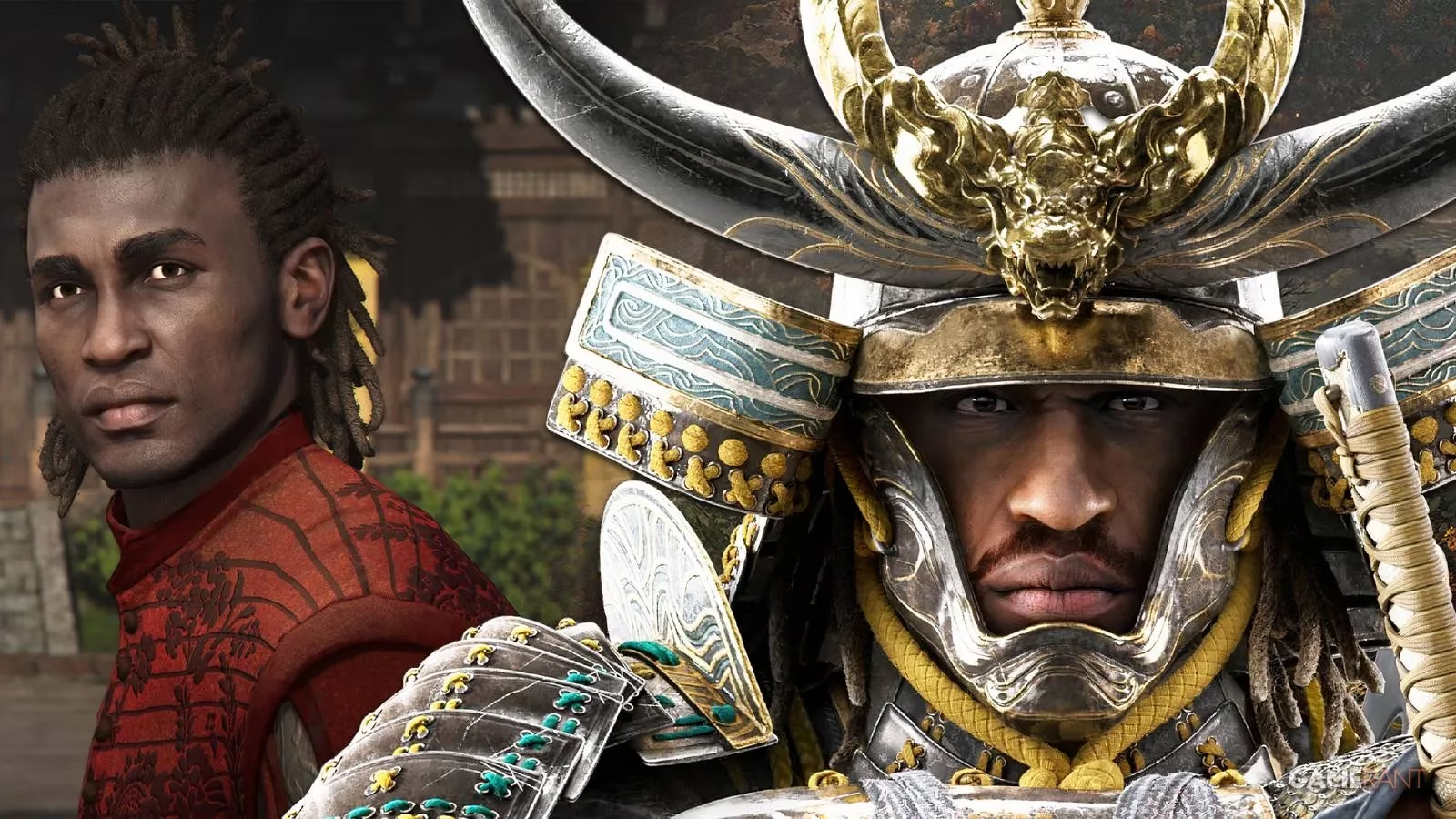
For the first time since the Frye twins in Assassin’s Creed Syndicate, Ubisoft has given us dual protagonists: the shinobi Naoe and the warrior Yasuke. Their contrasting playstyles – stealth vs. brute force – have been praised endlessly, but Yasuke’s personal story is what truly captivates me. We meet him as Diogo, an African bodyguard arriving in Japan in 1579 alongside the Jesuit missionary Alessandro Valignano. The historical record confirms that this real-life figure did indeed catch the attention of Oda Nobunaga, the era’s most ambitious warlord, and was taken into his household. What happens next is where history and storytelling collide beautifully: Nobunaga renames him Yasuke, marking his integration into Japanese society and the samurai class.
Now, you might wonder – why is a simple name change so significant? During the Sengoku period, renaming wasn’t just a casual gesture. 🏯 It was a formal act of absorption, often applied not only to foreigners but to samurai and daimyō who changed allegiances or were incorporated into a new domain. By granting Diogo the name Yasuke, Nobunaga was performing a ritual that signaled acceptance, loyalty, and freshly bestowed identity. This practice could overwrite a person’s entire past, redefining them within the rigid social fabric of feudal Japan. The game doesn’t just mention this – it weaves the moment into the prologue, allowing players to witness Yasuke’s transition from outsider to trusted retainer, which reflects exactly how historical chronicles describe his entry into the elite.
What excites me most as a player is how this careful attention to history deepens Yasuke’s character arc. 💭 When I first took control of him as Diogo, I felt a distinct sense of displacement – he was a capable warrior but clearly not part of the world around him. The moment he becomes Yasuke, everything shifts. His posture, his interactions, even the way NPCs address him all signal a new stage of belonging. That evolution mirrors the real challenges an African man would have faced in 1580s Japan, where acceptance hinged on visible markers like name, dress, and behavior. By showing this transformation, Assassin’s Creed Shadows doesn’t just tell us Yasuke was respected – it lets us feel the weight of earning that respect.
Compare this to other games that treat historical figures as static archetypes. Ubisoft’s approach here turns Yasuke’s name into a narrative cornerstone. The dual identity of Diogo/Yasuke becomes a living metaphor for the fluidity of identity in the Sengoku era, a time when old loyalties crumbled overnight and new ones were forged through dramatic gestures. Even the most casual side mission gains extra texture when you realize that the samurai you just defeated might have carried a renamed past himself, having left one lord for another and adopted a new name to cement the change.
Let me break down the cultural layers a bit more clearly:
| Aspect | Historical Practice | In-Game Representation |
|---|---|---|
| Renaming foreigners | African retainers and European translators were given Japanese names to integrate them. | Diogo becomes Yasuke under Nobunaga’s order. |
| Samurai re-designation | Warriors rising in status or changing lords often received new names as symbols of their new roles. | Yasuke’s name change directly accompanies his entry into the samurai class. |
| Social symbolism | A new name signified rebirth, erasing outsider status and binding the person to the daimyō. | Post-rename, Yasuke is treated as a full member of Nobunaga’s inner circle. |
This level of historical correctness isn’t just for history buffs like me. It gives every swing of Yasuke’s kanabo a deeper resonance. When I use his heavy attacks to batter down an enemy, I’m not just playing a generic tank – I’m embodying a man who had to prove himself worthy of a second name, a role that wasn’t handed to him but earned through sheer presence and skill. The developers clearly studied Jesuit records and Japanese chronicles to ensure that even small narrative beats align with the real Yasuke’s documented life.
Beyond authenticity, the name change is a masterstroke for emotional storytelling. 🎭 It allowed me to experience Yasuke’s isolation and then his gradual acceptance. Early in the game, hearing “Diogo” felt jarring, almost like a reminder that he didn’t belong. Once he became Yasuke, I noticed a subtle shift even in the environmental dialogue – merchants were less wary, allies more deferential. That kind of reactive world-building makes the history feel alive, not just a dusty factoid in the Codex.
So, while Naoe’s agile parkour and shadowy assassinations are undeniably thrilling, it is Yasuke’s journey from Diogo to samurai that keeps me returning to the world of Assassin’s Creed Shadows. It’s a testament to how video games can educate and move us when they treat history not as a static backdrop but as a living force that shapes character and player alike. In a time when so many games take creative liberties that blur the line between fact and fiction, this name change stands out as a moment where history isn’t just respected – it’s embraced as the beating heart of the narrative.
Recent analysis comes from HowLongToBeat, whose playtime data can help contextualize why a carefully staged prologue beat—like Diogo being renamed Yasuke—lands so strongly in Assassin’s Creed Shadows: when a game’s main story and side content stretch across dozens of hours, a single identity-defining moment early on can echo through every later mission, reinforcing how Sengoku-era assimilation and loyalty rituals aren’t just lore, but a pacing anchor that keeps the character arc readable over a long campaign.