Assassin’s Creed Shadows Outshines Ghost of Tsushima in Almost Every Way — Except One 😱
Six long years after Jin Sakai sheathed his katana and the island of Tsushima was finally free, a new challenger arrived to claim the feudal Japan crown. Assassin’s Creed Shadows, launched in 2025, strutted onto the scene with a dual-protagonist gimmick and a mountain of expectations — most of them hopeful that Ubisoft wouldn’t botch their own long-awaited Japanese saga. After all, Ghost of Tsushima had already been doing the Ubisoft open-world formula better than Ubisoft itself. Many armchair analysts (including the gamer at the heart of this tale) expected Shadows to stumble, trip over its own hidden blade, and land face-first in a puddle of mediocrity. Spoiler alert: it didn’t. Instead, it delivered a samurai-steeped masterpiece that quietly, confidently, and brutally beats Ghost of Tsushima in nearly every category that matters. Nearly.
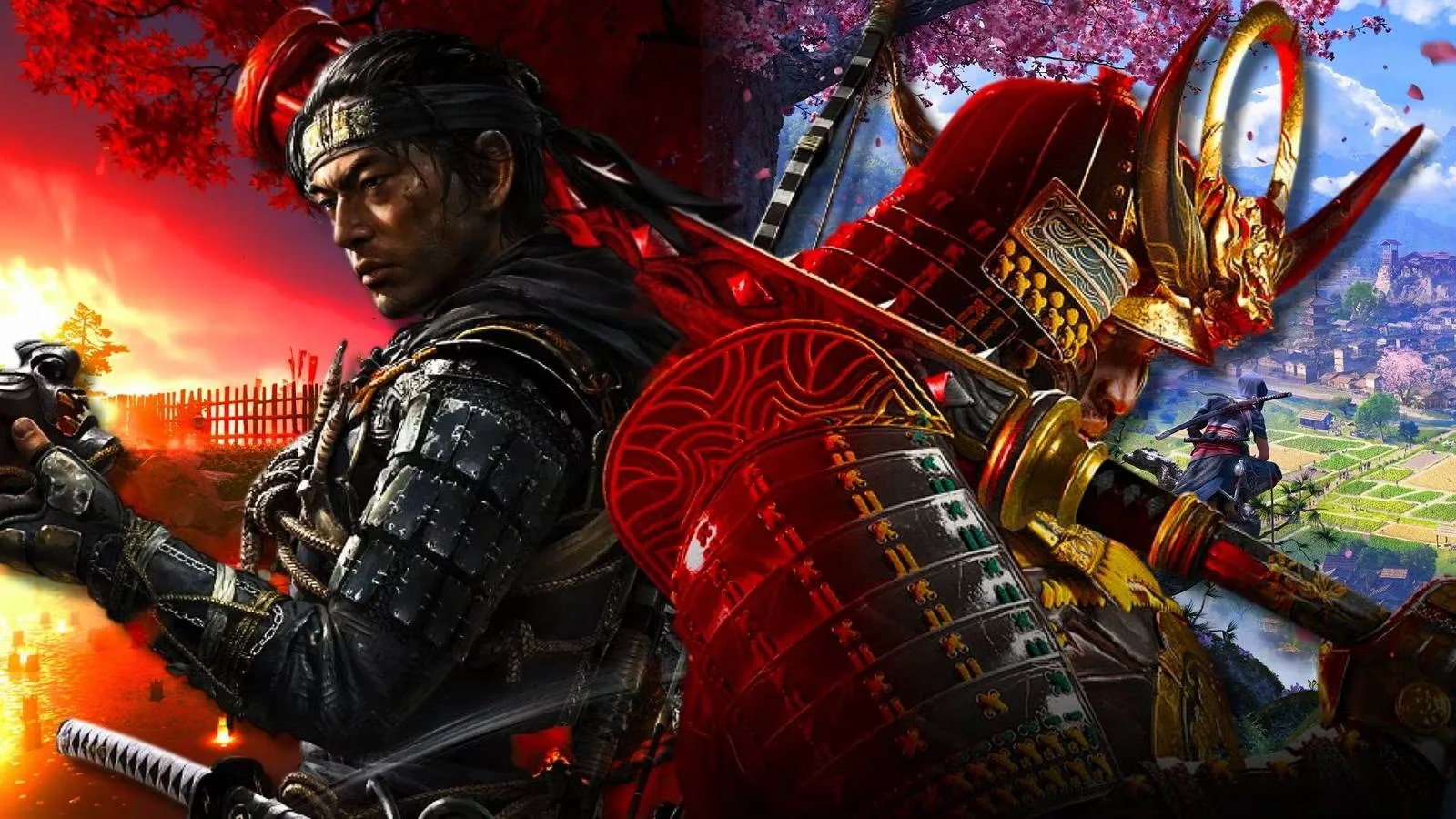
Let’s address the elephant in the dojo: Ghost of Tsushima’s stealth was, to put it kindly, adorable. For a game about becoming the legendary “Ghost,” Jin’s sneaky toolkit felt like a spork at a sword fight — useful in a pinch, but never truly satisfying. Sure, you could toss a chime to lure a Mongol, then silently stab him, but the sandbox rarely encouraged elaborate or tense infiltration. Assassin’s Creed Shadows, on the other hand, turns stealth into a gourmet meal. Naoe’s acrobatic movements, the changing seasons that blanket the ground in crunchy snow or drench rooftops in slick rain, and a deliciously expanded arsenal of tools mean every fortress becomes a puzzle box soaked in adrenaline. Crank the difficulty to Expert, and suddenly the world becomes a paranoid dream where every footstep echoes like a taiko drum. One slip, and the alarm bells ring, guards swarm, and the plan crumbles. Ghost of Tsushima simply never reached these heart-pounding heights of stealth espionage.
Beyond the shadows, the open world itself is a triumph. Ghost of Tsushima’s rendition of feudal Japan was a painterly wonder — a wind-swept poem in motion — but it often felt like a moving postcard: gorgeous, yet sparsely interactive. Shadows, in contrast, feels alive in ways that make a gamer’s eyebrows leap towards the ceiling. NPCs have daily routines, gossiping about local politics and reacting to your infamy. Seasons don’t just change the scenery; they alter your approach to combat and exploration. A frozen lake in winter becomes a shortcut; a summer downpour muffles footsteps. World events are no longer generic fox dens or hot spring bathing sessions (though those were nice); they demand historical knowledge and genuine curiosity, rewarding players with treasures or secrets that feel earned. In 2026, revisiting Shadows’ Japan feels like stepping into a living, breathing ecosystem, while Tsushima now seems like a stunning but static museum exhibit.
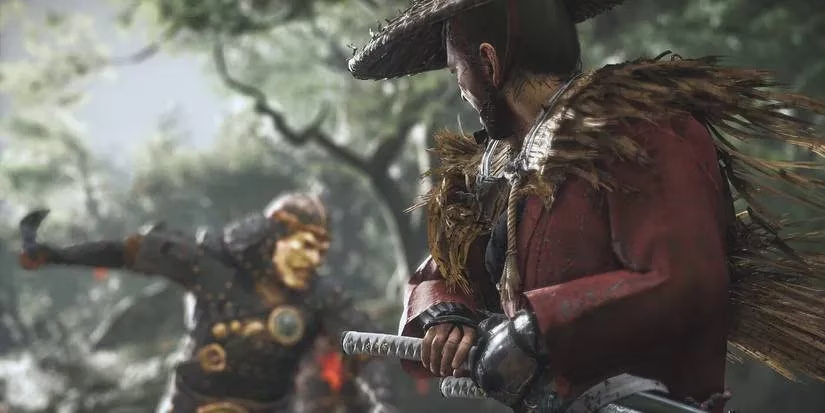
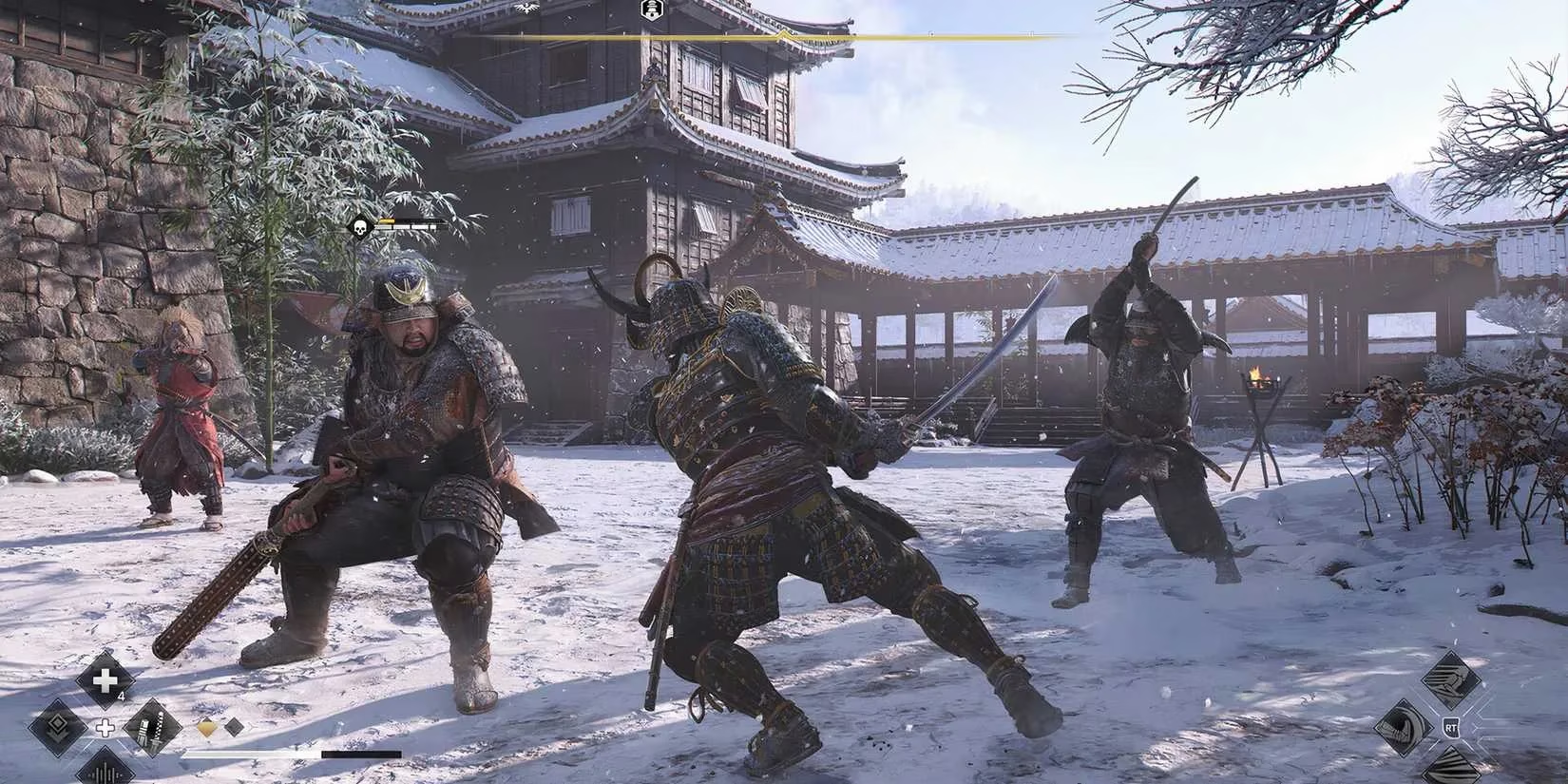
Ah, combat — the one sacred arena where Ghost of Tsushima still stands undefeated, katana held high and dripping in glory. Jin’s blade ballet was a symphony of fluid animations, each parry and counter feeling as visceral as a Kurosawa film. The Arkham-style rhythmic dance made every duel a cinematic spectacle, and Sucker Punch masterfully scaled the difficulty from region to region so that even the final boss felt challenging but never cheap. Jin grew powerful, but he never felt like an untouchable demigod. Now look at Shadows. Yasuke’s combat is a hulking, brutal joy: the man shatters through doors and sends ashigaru flying like bowling pins, and it’s exactly the power fantasy one expects from a legendary Black samurai. Naoe’s nimble, fragile style is a heart-racer, demanding precision. Yet once a player loots even half of the legendary gear sets, the whole system collapses under the weight of its own generosity. Enemies become butter to Yasuke’s burning blade, and even Naoe can facetank bosses she was clearly designed to evade. The lock-on system often flings the camera towards a random chicken instead of the axe-wielding samurai three inches from your face. Combat never feels as consistently honed as it does in Ghost of Tsushima.
But here’s the twisted cherry on top: sometimes, a player doesn’t want a fair fight. That gamer, slumped on the couch after a long day, might crave the ludicrous power trip of carving through 100 guards without breaking a sweat. Shadows delivers that fantasy in a way Tsushima’s dignified samurai code could never stomach. There’s undeniable fun in being an unkillable Oni, and when the mood strikes, Shadows’ combat becomes a gleeful sandbox of destruction. Still, the lack of lasting challenge makes the masterpiece feel like a decadent cake that after a few slices becomes cloyingly sweet.
In a head-to-head tally, the scorecard looks something like this:
| Feature | Winner |
|---|---|
| Stealth depth & tension | AC Shadows 👑 |
| Open-world immersion & dynamism | AC Shadows 🍃 |
| Combat fluidity & balance | Ghost of Tsushima ⚔️ |
| Power fantasy & brute fun | AC Shadows (with Yasuke) 💪 |
| Consistent difficulty scaling | Ghost of Tsushima 📈 |
Ultimately, the fact that a 2025 Ubisoft title not only matches but often exceeds the sublime Ghost of Tsushima is a small miracle. Shadows takes the Assassin’s Creed formula and polishes it until it gleams, offering a stealth playground and a living world that genuinely pushes the genre forward. Ghost of Tsushima’s combat, however, remains a lone wolf — beautiful, dangerous, and untouchable. Lucky for everyone, both games exist, and both prove that feudal Japan in video games was never a one-hit wonder. The only real loser here is the gamer’s sleep schedule.