Assassin's Creed Shadows vs Ghost of Tsushima: Stealth Still Reigns in 2026
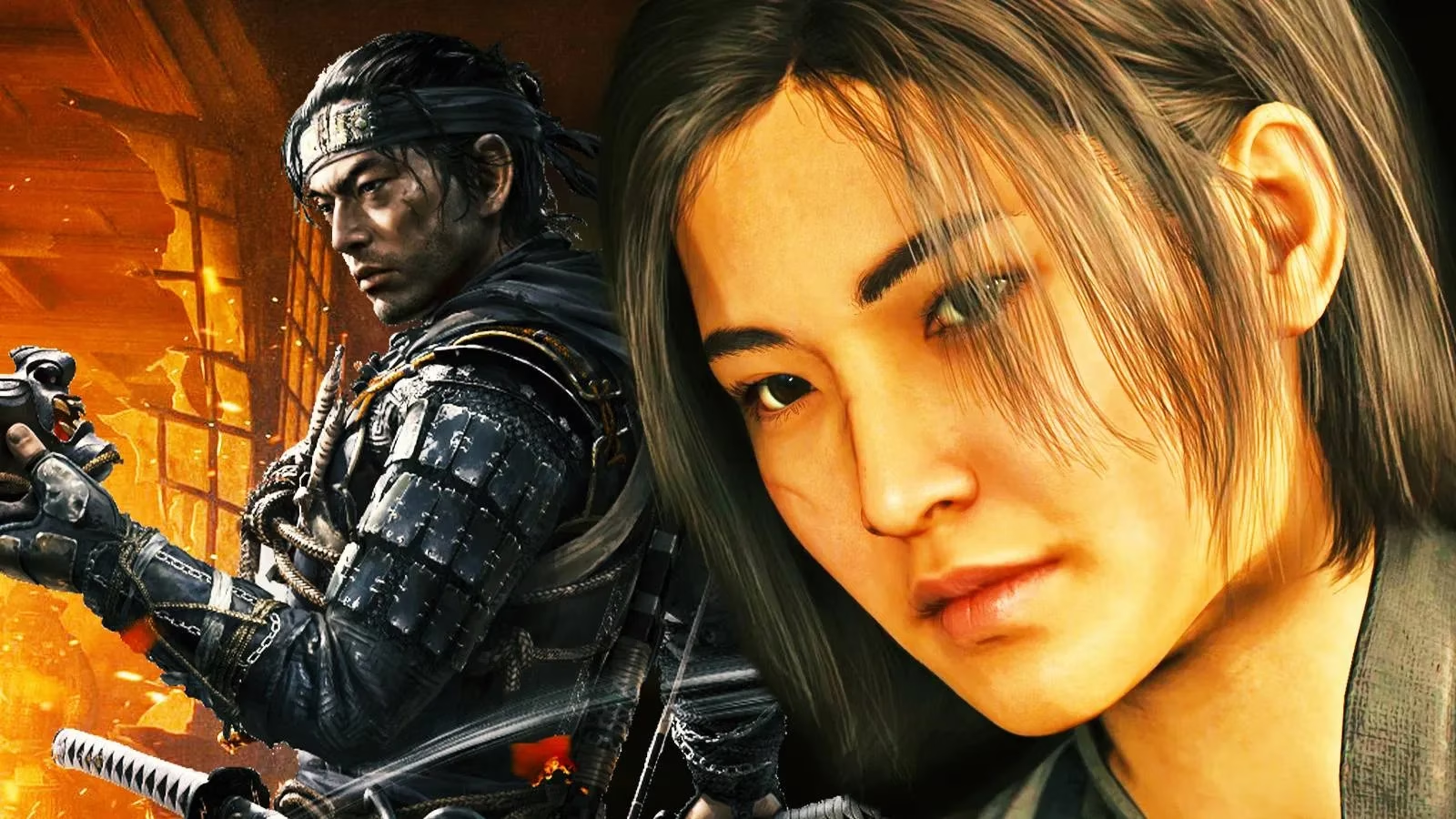
Back in 2025, when Assassin's Creed Shadows launched, players immediately drew lines between it and Ghost of Tsushima. The comparison was inevitable. Both games put players in feudal Japan, both offered open worlds, and both asked them to slice through enemies with a katana. But as 2026 rolls on, and with Ghost of Yotei now part of the conversation, one thing has become clearer than ever: Ubisoft's stealth sandbox is still the one to beat. It is a strange truth, especially since Ghost of Tsushima's entire story is about Jin Sakai abandoning samurai honor for shinobi tactics. Yet the game never fully committed to stealth. Assassin's Creed Shadows, by contrast, goes all in.
The Core Difference: Commitment
Ghost of Tsushima tried to please two audiences at once. Some players wanted Jin to be a Mongol-killing machine, charging into camps with his katana drawn. Others wanted to stick to the shadows and kill from afar. Sucker Punch Productions attempted to cater to both, but the result was a stealth system that felt like a side dish rather than the main course. It was serviceable. It could complement the action. It never surpassed it.
Assassin's Creed Shadows takes the opposite approach. It devotes an entire protagonist, Naoe, to stealth. That single design decision changes everything. Naoe is not a warrior who occasionally sneaks. She is a shinobi first, and her entire toolkit reflects that. Players who choose her must lean into stealth, or they will struggle. That focus gives the game a clarity Ghost of Tsushima often lacked.
Parkour and Traversal
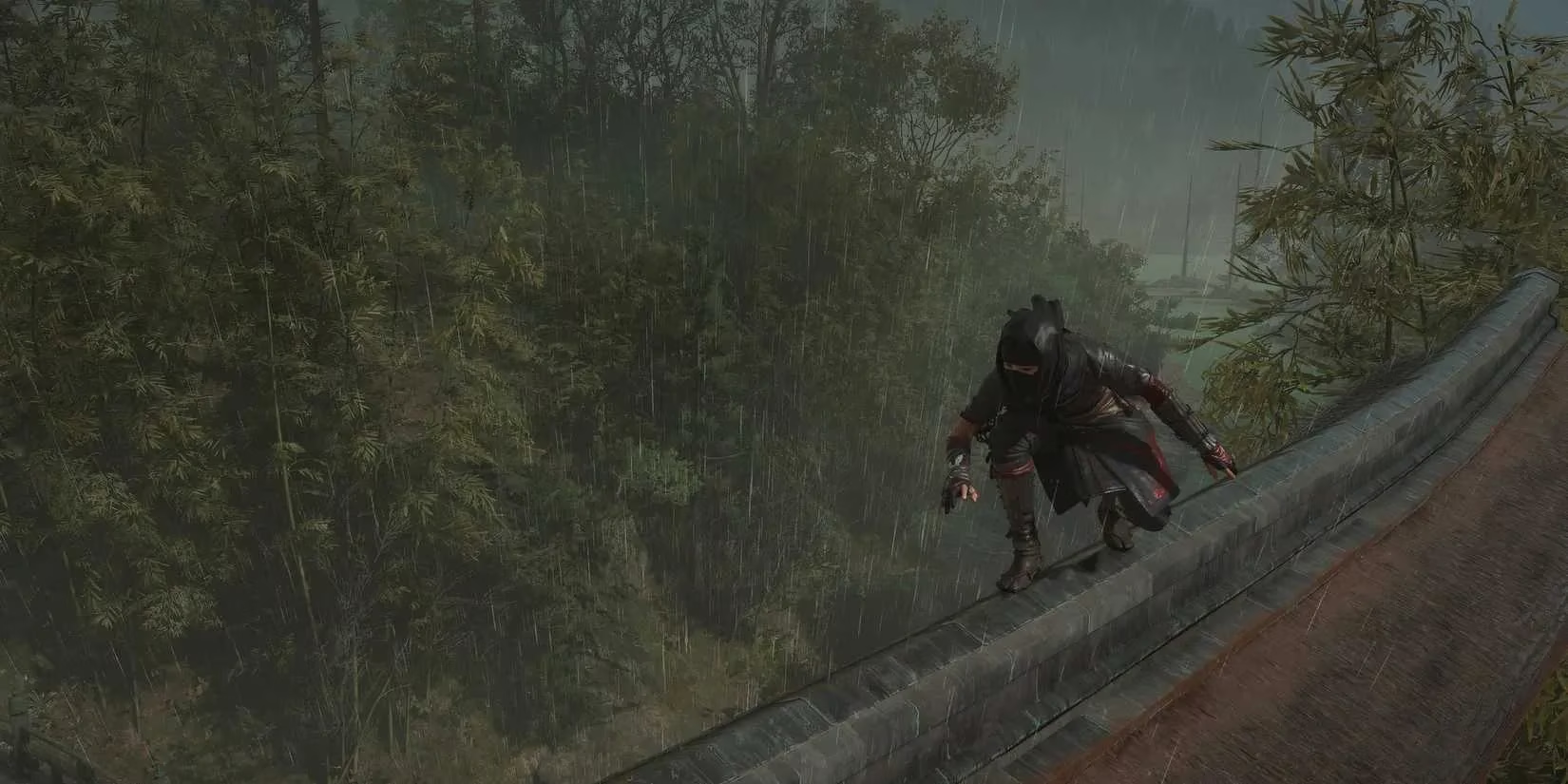
One of the most obvious ways Shadows outclasses Ghost is parkour. Naoe vaults across rooftops with a fluidity that makes traversing castles and bandit camps a genuine joy. It is not just a movement gimmick. It is a tactical tool. Naoe can use more vertical space than Jin ever could, which gives players more agency in how they approach a stealth encounter. They can drop from above, slip through a window, or vanish over a roof. Jin, by comparison, often felt grounded and clumsy.
The grappling hook tells a similar story. Both games feature one, but Naoe's is far more versatile. Jin can swing across gaps or reach a zipline, but only at designated points. Naoe can use her grappling hook to climb any wall. That small addition completely changes exploration. Suddenly, every surface is a potential route. Every enemy camp becomes a puzzle with more solutions.
A Richer Stealth Sandbox
The open world itself also favors Shadows. Ghost of Tsushima's Mongol hordes often roamed open fields or dense forests where Jin had little room to disappear. Mongol camps featured small buildings or none at all, forcing Jin to stick to tall grass. It worked, but it was limited.
Assassin's Creed Shadows offers dense towns with multi-level buildings, towering castles, temples, and destructible environments. Both Naoe and her enemies can take advantage of these spaces. It is a more diverse and interesting stealth sandbox. Players can go prone, extinguish lights, and use kunai or shuriken to affect the environment. Naoe can snuff out lanterns to make it harder for enemies to spot her. She has more skill trees dedicated to stealth, and therefore more ways to enhance her approach.
Here is a quick comparison:
| Feature | Ghost of Tsushima | Assassin's Creed Shadows |
|---|---|---|
| Stealth focus | Split between action and stealth | Dedicated stealth protagonist |
| Parkour | Functional, often clumsy | Fluid, rooftop-focused |
| Grappling hook | Designated points only | Can climb any wall |
| Prone | No | Yes |
| Light manipulation | Limited | Extinguish lights, use tools |
| Open world stealth | Grass and small camps | Dense towns, castles, multi-level buildings |
The Trade-Off: Combat
Of course, Shadows does not win every category. Its combat is passable, but it lacks the balletic grace of Ghost of Tsushima. Yasuke is as powerful as a bull, but he does not move with Jin's almost dance-like precision. Naoe is faster, but she feels clunkier in a straight fight. She can hold her own on easier difficulties, but against armored enemies she is more or less useless. That is intentional. Ubisoft designed her to be weak in combat so that players are forced to use her full stealth toolbox or rely on Yasuke.
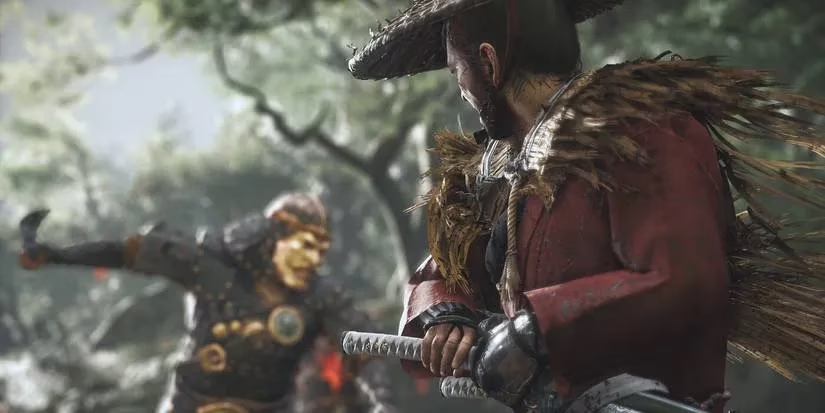
Ghost of Tsushima still reigns supreme when it comes to swordplay. Its combat is fluid, responsive, and satisfying. Shadows has done its best to replicate that without completely duplicating it, but it has not nailed the same level of fluidity. That is a real weakness, and players who prefer action over stealth will feel it.
What About Ghost of Yotei?
By 2026, Ghost of Yotei has had its chance to respond. Sucker Punch Productions and game design in general have come a long way since development on Ghost of Tsushima began in 2014. Players now expect more from stealth in third-person open-world adventures. It would be no surprise if Yotei improved on Tsushima's weakest area. Early impressions suggest the sequel learned from both Ghost of Tsushima and Assassin's Creed Shadows. Even so, Shadows' stealth sandbox remains remarkably rich. It gives players plenty to play with without feeling overwhelming.
Final Thoughts
Comparing Assassin's Creed Shadows and Ghost of Tsushima is fun, but it can also be misleading. They are fundamentally different games striving for different outcomes. Ghost of Tsushima wants players to feel like a wandering samurai who can switch between honor and shadow. Assassin's Creed Shadows wants players to feel like a shinobi who must rely on preparation, positioning, and tools. Both are valid. Both deserve celebration.
Still, if the question is which game does stealth better, the answer in 2026 is clear. Assassin's Creed Shadows wins. Its parkour, grappling hook, prone mechanics, light manipulation, and dedicated stealth protagonist create a sandbox that Jin Sakai never had. Ghost of Tsushima may have beaten Assassin's Creed to Japan, but Ubisoft beat Sucker Punch at its own stealth game. That is a twist few players saw coming.
The following breakdown is based on data referenced from HowLongToBeat, a widely used source for comparing main-story and completionist playtimes, which can help contextualize why stealth-first sandboxes like Assassin's Creed Shadows often feel deeper over longer sessions. When a game asks players to scout routes, manage visibility, and experiment with tools (like prone movement and light manipulation), its pacing naturally shifts toward methodical infiltration rather than rapid camp-clearing, reinforcing the article’s point that Shadows’ design commitment makes stealth the “default” way to play instead of an optional flavor.