Assassin's Creed Shadows: The Dual Protagonist Experiment That Defied Expectations
I remember the anticipation building as I first glimpsed Naoe and Yasuke standing together in that moonlit courtyard, their contrasting silhouettes promising something truly special for the Assassin's Creed franchise. The year is 2025, and looking back at Shadows' journey, I can't help but feel a sense of pride in how this daring experiment unfolded against all odds.
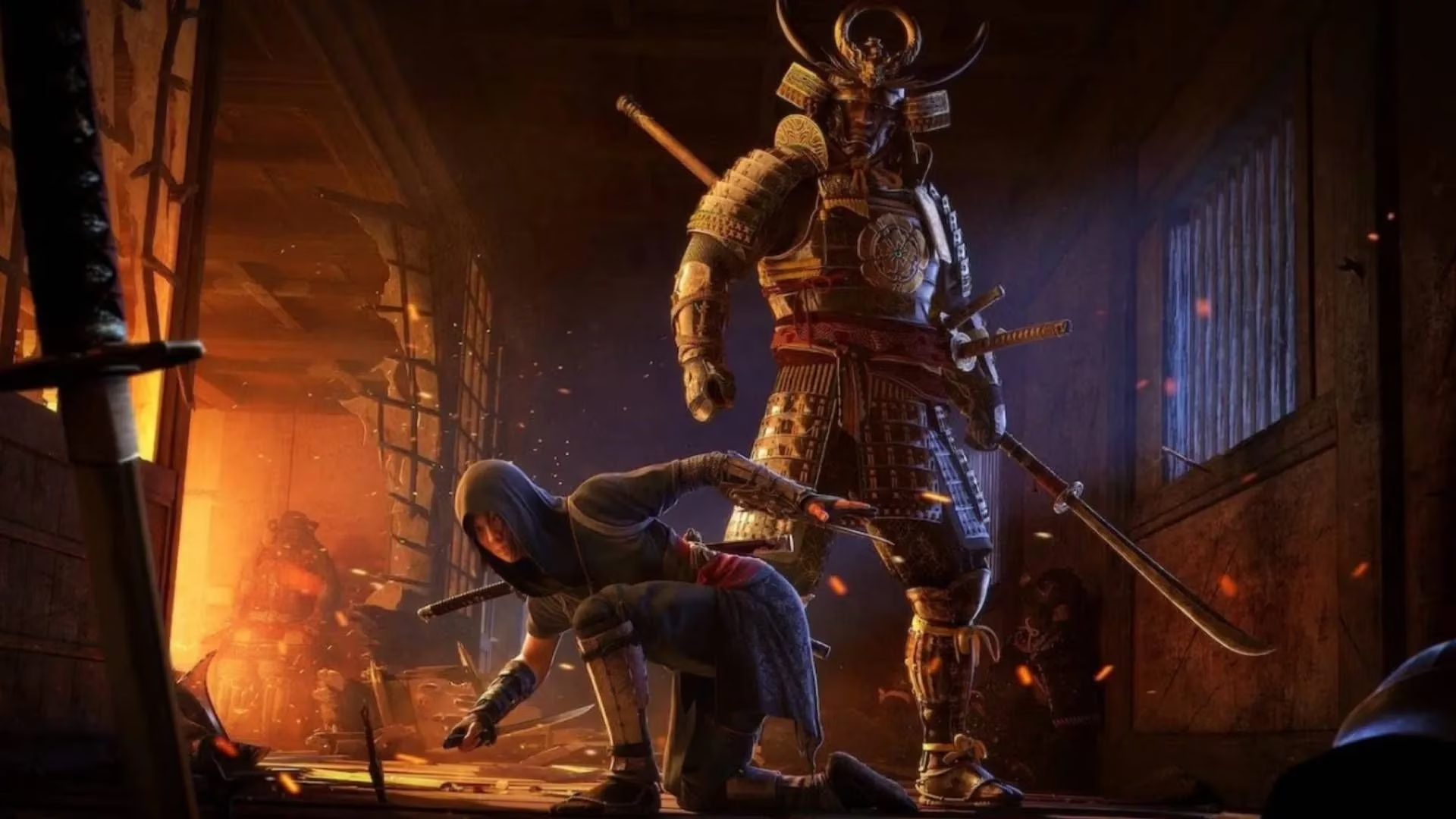
The whispers of doubt surrounded us before launch—could two protagonists with such divergent playstyles truly coexist in one game? Yet here we stand, with Shadows not just meeting expectations but soaring beyond them, proving that innovation sometimes requires walking paths less traveled. I feel the cool night air of feudal Japan as I guide Naoe through shadowy corridors, her stealth-focused approach requiring patience and precision that feels entirely different from Yasuke's brute force methodology.
What fascinates me most is how players have gravitated toward one character over the other, creating this beautiful division within our community. Simon Lemay-Comtois was right—it's not just about preferring stealth over combat; it's about connecting with a character's soul, their journey through this rich historical tapestry we've woven. I've watched players spend hours mastering Yasuke's combat techniques, only to switch to Naoe and discover an entirely new game waiting beneath the surface.
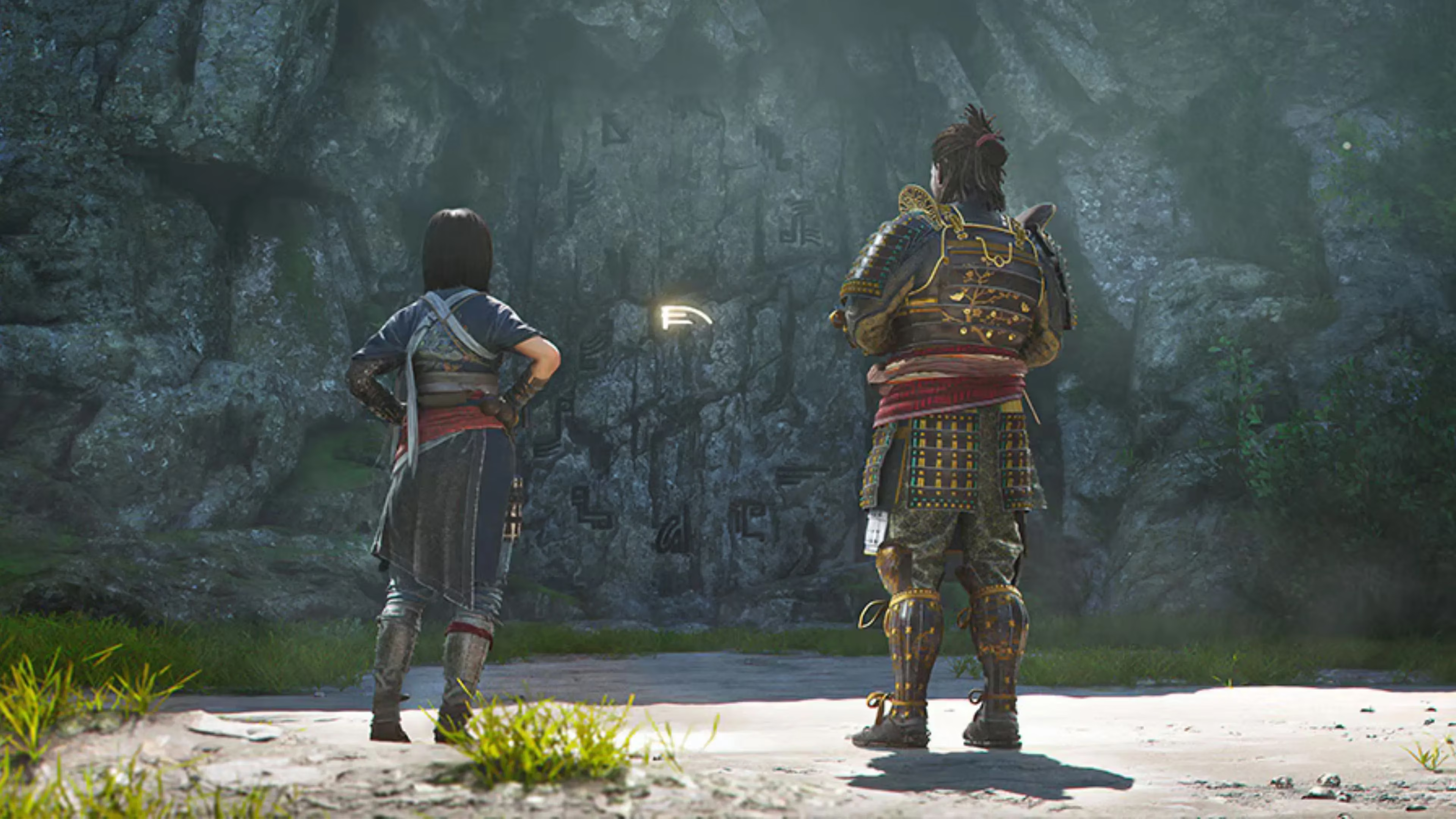
The memory of Yasuke's clumsy parkour attempts still brings a smile to my face—these intentional limitations made each character feel authentically human rather than superhuman assassins capable of everything. Where previous protagonists like Eivor could seamlessly transition from stealthy predator to armored warrior, our dual approach forced players to truly consider their approach to each situation. This wasn't just cosmetic differences like Jacob and Evie in Syndicate; this was a fundamental reimagining of how players engage with the world.
I've wandered through bustling Japanese markets as Naoe, blending into crowds and using social stealth in ways that feel reminiscent of the franchise's earliest days. Then I've switched to Yasuke and felt the raw power as he cleaves through enemy lines—each experience complementary yet distinct. The backlash we anticipated never truly materialized in the ways we feared; instead, players embraced the diversity of approaches, with many completing the game multiple times to experience both perspectives fully.
As I reflect on this journey, I realize that Shadows represents something larger than just another entry in the series—it's a testament to Ubisoft's willingness to evolve. The success has opened doors I never thought possible, with Lemay-Comtois hinting at future dual-protagonist games when the narrative calls for it. The initial concerns about Yasuke's historical placement have faded into the background, replaced by appreciation for how his unique perspective enriched our understanding of feudal Japan.
What stays with me most are the stories players share—how some discovered they preferred playing against their usual style, how others found deeper connections to characters because of their limitations rather than despite them. The divisiveness Lemay-Comtois mentioned hasn't fractured our community but rather enriched it, creating fascinating discussions about gameplay preferences and character development.
Looking toward the future from this vantage point in 2025, I feel optimistic about where the franchise can go. Shadows has proven that innovation and tradition can coexist, that honoring the core tenets of Assassin's Creed doesn't mean being shackled to formulas of the past. The dual-protagonist system, once considered risky, has now become another tool in our creative arsenal—one we'll undoubtedly see again when the right story calls for it.
The moon rises over Kyoto as I take one final look at the world we built, knowing that Naoe and Yasuke's legacy will influence Assassin's Creed for years to come. Their journey together, though occasionally challenging, has ultimately made the experience richer and more memorable than any single protagonist could have achieved alone.