Assassin's Creed Shadows and the Art of the Perfect Hideout
When the first plot of land appeared on the map in Assassin's Creed Shadows, it did not look like a revolution. It looked like a stable, a large building called the Hiroma, and a stretch of ground waiting for purpose. Yet for a series that had spent years circling the idea of a home base, that patch of land became something more. In 2026, as players continue to compare the franchise's many experiments with base-building, the hideout in Shadows stands out as the most complete version of an idea Ubisoft had been chasing for over a decade.
The history matters. Brotherhood gave players Monteriggioni. Assassin's Creed 3 offered a homestead. Valhalla built an entire settlement. Each attempt had charm, but each also kept players at arm's length. Buildings sat on fixed plots. Choices felt like selections from a menu rather than acts of ownership. Shadows changes that by handing over the land itself. Apart from the stable and the Hiroma, almost nothing is locked in place. If players have the resources, they can place buildings wherever they like. They can extend the Hiroma, scatter small structures across the grounds, or dedicate an absurd amount of space to a field of dogs. The tone is playful, but the design is serious: the hideout 🏯 is no longer a backdrop. It is a project.
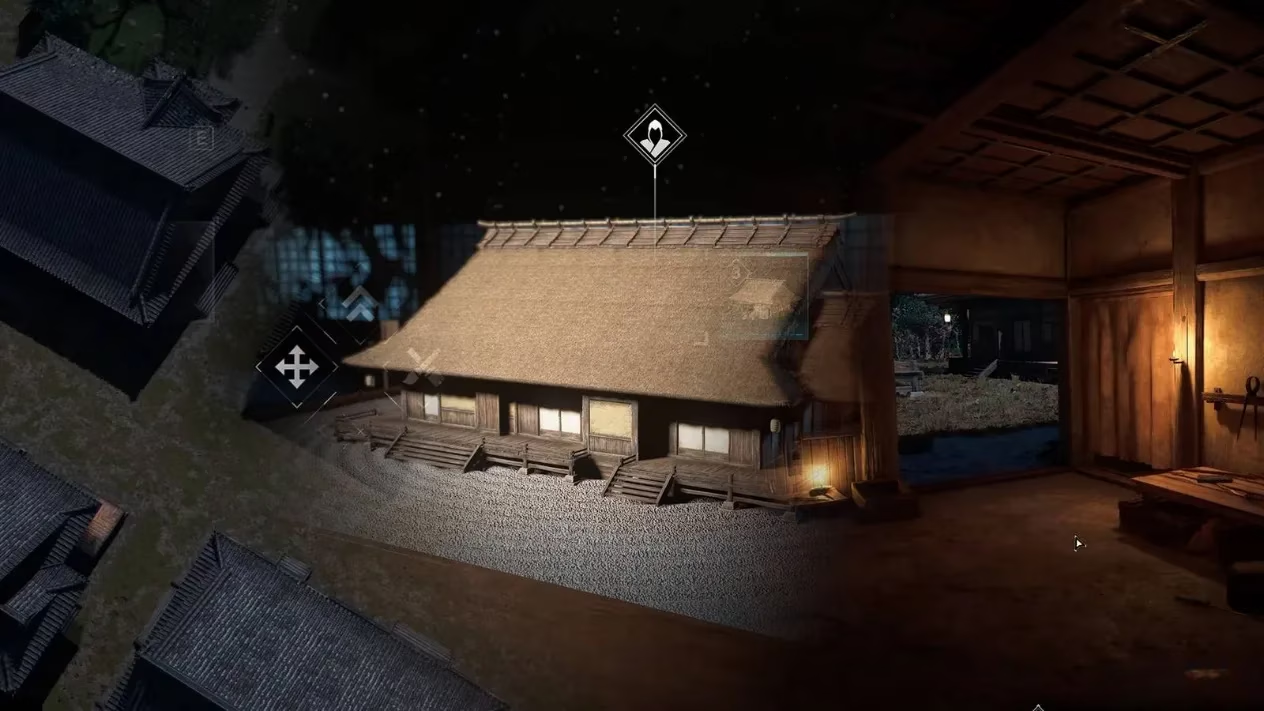
That freedom grows as the game progresses. New buildings, decorations, and even pets unlock over time, turning the hideout into a living record of a player's journey. A player who favors stealth may build quiet rooms and practical upgrades. A player who loves spectacle may turn the grounds into a small village of curious shapes and carefully placed ornaments. Because buildings can be picked up and moved whenever the mood changes, the hideout never has to be finished. It can be revised, rebuilt, and reimagined. That flexibility is the feature's greatest strength. It invites experimentation instead of punishing it.
The practical side is just as important. Shadows ties the hideout to systems that shape the wider campaign. The scout system gives players a limited number of scouts each season, and those scouts can search the world for quest objectives when simple markers are not enough. More buildings mean more functionality for those scouts, so time spent on the hideout feeds directly back into exploration. The base is not a decorative side attraction. It is a quiet engine behind the adventure.
| Feature | What It Does | Why It Matters |
|---|---|---|
| Scout network 🧭 | Sends limited scouts to search for objectives each season | Supports exploration and reduces marker-chasing |
| Forge ⚒️ | Upgrades gear | Turns resources into combat readiness |
| Dojo 🥋 | Upgrades abilities | Deepens character progression |
| Smaller rooms 🏠 | Add assorted perks | Rewards careful layout and investment |
| Ally housing 👥 | Gives recruited allies a home | Makes the hideout feel populated and alive |
The forge, the dojo, and the smaller rooms give the hideout a practical rhythm. Players gather resources, invest in facilities, and watch the base become more capable. Recruited allies use the hideout as a home, and some can even join the player on adventures. That detail matters because it turns the base from a collection of buildings into a place with people in it. A forge is useful. A forge with familiar faces around it is memorable.
There is also a simple pleasure in the scale of control. Previous games often asked players to choose between a few predetermined slots. Shadows asks them to think about space. Where should the path run? Which building should sit near the water? Is there room for one more decoration, or one more dog? The questions are small, but they add up to something personal. In a franchise full of grand conspiracies and ancient orders, the hideout offers a different kind of fantasy: the fantasy of coming home to a place that looks exactly the way it should.
By 2026, the hideout has become a benchmark rather than a curiosity. It shows how base-building can be both expressive and mechanical, both playful and useful. Some players will ignore it and focus on the main path. That is fine. The best version of a feature does not force itself on everyone. It simply gives the people who care the tools they need. Shadows does that with uncommon generosity. If future entries carry this idea forward, the franchise may finally have a home base worth keeping.