AC Shadows' Secret Ingredient: How NPCs in Castles Redefine Open-World Immersion
Hey everyone, it's your friendly neighborhood gamer here, and I just have to gush about something that's been living rent-free in my mind since I dove into Assassin's Creed Shadows last year. Look, I know the discourse around this game has been... spicy, to say the least. But setting aside the debates about its GOTY potential or its place in the Ubisoft pantheon, there's one specific, brilliant design choice that has fundamentally changed how I view enemy bases in open-world games. It's not about flashy new combat or a bigger map—it's about something much quieter and more profound: filling its sprawling Japanese castles with people.
For years, I've had this low-key pet peeve with video game enemy encampments. You know the drill: you sneak up to a fortress, a bandit camp, or a goblin den, and it's just... wall-to-wall hostile NPCs, standing around like mannequins with weapons, waiting for you to start the murder-puzzle. Whether it was the grand palaces of Assassin's Creed Odyssey or the magical camps in Hogwarts Legacy, these places always felt like sterile combat arenas, not living, breathing spaces. It always broke my immersion. Like, come on, in real life, a castle isn't just a barracks! Where are the cooks, the servants, the messengers, the nobles having a tense political discussion?
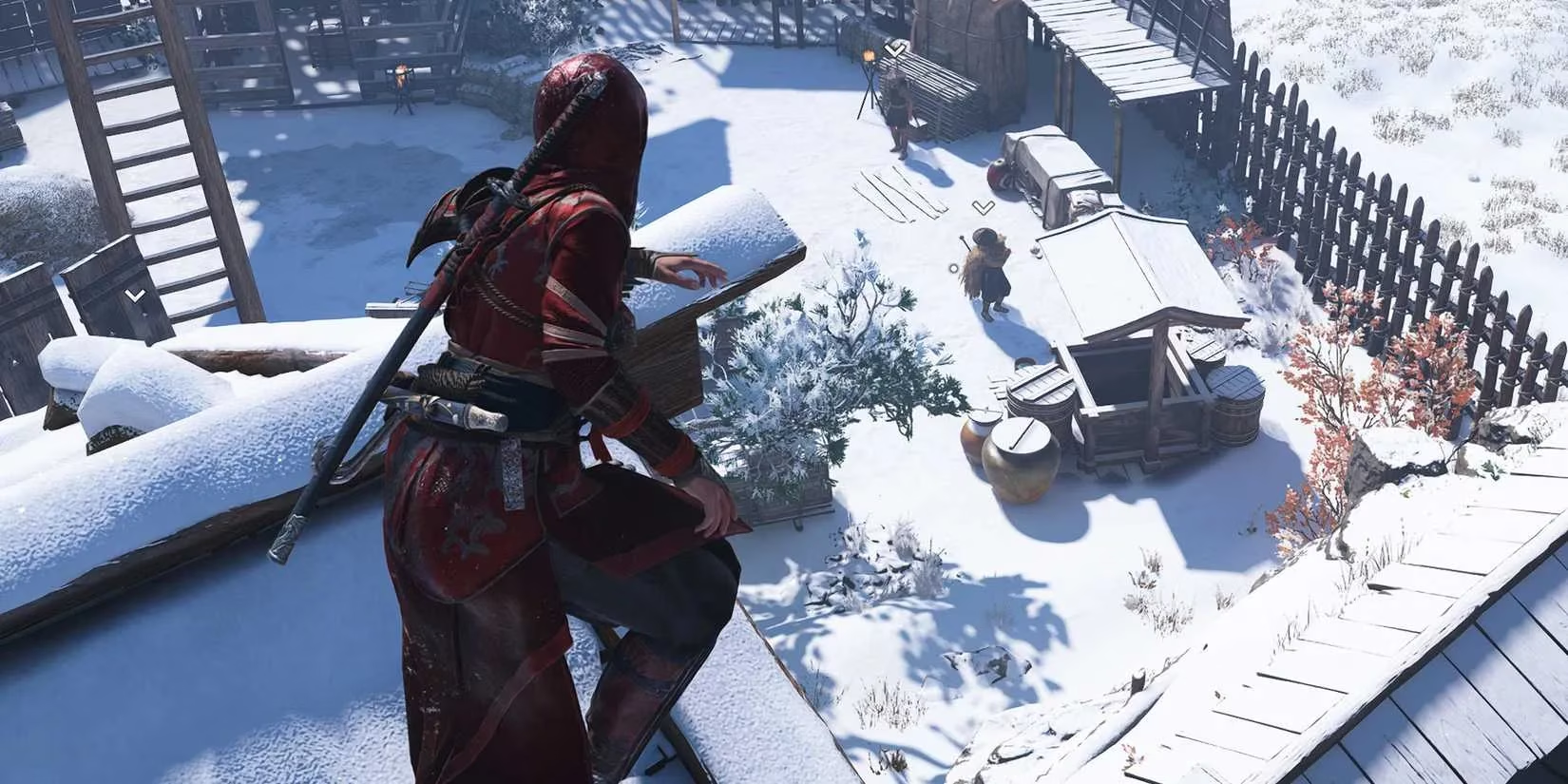
That's where Assassin's Creed Shadows absolutely knocked it out of the park for me. When I first infiltrated a castle as Naoe, I was mentally preparing for the usual routine: tag enemies, plan routes, execute takedowns. But then I saw them—dozens of non-combatant NPCs just going about their day. We're talking:
-
Servants scurrying along walkways with trays.
-
Monks in quiet contemplation in garden corners.
-
Artisans doing... well, artisan things.
My first thought was pure panic. "Great," I muttered to myself, "more witnesses to screw up my perfect stealth run." But that's the genius of it! These NPCs aren't just set dressing; they have a real gameplay function. If they spot you doing something shady, they don't attack—they run and alert the guards. This one mechanic completely transformed the stealth sandbox. It was no longer just about avoiding the red vision cones on the mini-map; I had to consider the gaze of every single person in the castle, soldier or not. It added a layer of tension and realism that previous AC games, and honestly most open-world titles, completely lack.
This design philosophy does more than just make stealth harder (though it definitely does that, especially with the game's fantastic difficulty options). It fixes a fundamental world-building flaw. It makes the setting of feudal Japan feel cohesive and believable. The castles in Shadows aren't just enemy loot piñatas; they are functional centers of power and life. This subtle touch is a huge reason why, for me, the world of Shadows often feels more immersive and grounded than even the stunning, but sometimes sterile, landscape of a game like Ghost of Tsushima.
Of course, I'm not saying it's perfect. I'd be lying if I didn't want more. 🥺
-
Where are the wealthy merchants arriving for an audience with the daimyo, creating potential alternate assassination opportunities?
-
Could we see construction workers repairing a wall, offering a new, noisy infiltration point?
-
What about attendants having hushed, plot-relevant conversations in the halls?
The castles, while a massive step forward, can still sometimes feel a bit static outside of scripted moments. I get it—animating and scripting all that "life" is a monumental task. The dev time needed to make guards play cards, argue about rations, or slack off on duty is probably insane, and the gameplay payoff might seem minimal to a spreadsheet. But I firmly believe that in 2026, as we've practically hit the ceiling on graphical fidelity, the next frontier for open-world games is this exact kind of systemic, immersive detail.

Let's be real: Ubisoft games occupy a specific, comfy niche. They are the blockbuster action movies of gaming—sometimes you crave a intricate indie drama (looking at you, Kingdom Come: Deliverance 2, you glorious, hardcore masterpiece), and sometimes you just want a brilliantly crafted, popcorn-munching adventure. Shadows is the pinnacle of that Ubisoft formula, refined and stripped of a lot of the bloat that plagued earlier titles.
But its legacy, for me, won't just be its commercial success or polished mechanics. It'll be that it proved a concept: that enemy bases can be more than combat playgrounds. They can be microcosms of the game's world. This isn't just about castles either. Imagine raiding a bandit camp in a future game and finding:
| Old Design | Shadows-Inspired Design |
|---|---|
| Guards on permanent patrol loops. | Guards taking breaks, gambling, complaining about their boss. |
| Empty tents and buildings. | Evidence of daily life—cooking fires, bedrolls, stolen goods being sorted. |
| Silent, waiting combatants. | NPCs chatting, creating ambient noise that can mask your footsteps or reveal secrets. |
That's the dream. Assassin's Creed Shadows planted this seed. It showed that adding believable, peaceful life to hostile spaces doesn't ruin the fun—it deepens it. It makes every infiltration feel like you're disrupting a real place, not just clearing a checklist. So here's my hope, shouted into the void: whether it's the next Assassin's Creed, the next big RPG, or any open-world game dreaming of immersion, please, learn from Shadows. Make your worlds breathe. Make your enemy bases feel lived-in. That, more than any graphical leap, is what will make virtual worlds truly unforgettable.